

Intimate wellness gummies are often marketed around mood, desire, comfort, confidence, or date-night readiness. The smart approach is not to chase a bold promise. It is to read the label, understand the claims, check personal safety factors, and keep expectations realistic.

This guide explains how to evaluate intimate wellness gummies without hype. You will learn what claims mean, what red flags to watch for, what questions to ask before using a supplement, and when a health professional is the safer next step.
Direct Answer
Intimate wellness gummies are supplement-style products made for adult sexual or intimate wellness routines. Before trying them, check the full ingredient list, dosage, age warning, medication cautions, pregnancy or nursing warnings, third-party testing, and whether the claims sound realistic.
They should not be treated as a cure for low desire, pain, hormone concerns, relationship problems, or medical conditions. If symptoms are persistent, distressing, painful, or medication-related, speak with a qualified health professional.
Table of Contents
Quick Decision Table
Use this table as a quick safety screen before trying any intimate wellness gummy. It will not replace medical advice, but it can help you avoid the most common rushed decisions.
| Question | Best Use Case | What to Avoid | Key Takeaway |
|---|---|---|---|
| Are you generally healthy and simply curious? | Learning how to evaluate labels and expectations. | Trying a product without checking ingredients or dosage. | Start with research, not impulse. |
| Are you pregnant, nursing, on medication, or managing a condition? | Asking a healthcare professional before using any supplement. | Assuming “natural” always means safe. | Personal health context matters. |
| Are you dealing with pain, distress, or a sudden change in desire? | Medical or therapeutic support. | Using gummies to avoid a real health conversation. | Supplements are not a diagnosis tool. |
| Are claims vague or too dramatic? | Looking for transparent labels and cautious wording. | Miracle language, guaranteed results, or hidden ingredient amounts. | Credible products explain limits. |
The Real-Life Situation
You see a gummy online that sounds simple: take it before a date, feel more relaxed, enjoy the moment, and avoid awkwardness. The packaging looks fun. The reviews sound excited. The ingredients may include herbs, spices, fruit flavors, or botanical extracts.

That is where many people make the wrong first move. They ask, “Will it work?” before asking, “Is it appropriate for me?” A better question is: “What exactly is in it, what does the label claim, and is there any reason I should not take it?”
Intimate wellness is personal. It can involve stress, sleep, body image, relationship comfort, medication side effects, hormonal changes, past experiences, and general health. Medical sources also explain that changes in sexual desire can be connected with relationship stress, anxiety, depression, sexual discomfort, pregnancy, menopause, and certain medicines, so it is wise to treat the topic with care rather than guesswork. Read the NHS overview of loss of libido guidance for a broader health-context explanation.
A gummy may be part of someone’s lifestyle routine, but it should not be used as a shortcut around deeper concerns. If you want to see how these safety checks apply to a real product example, read our Spicy Cubes review before deciding whether a date-night gummy fits your situation. For more gentle wellness education, you can also explore wellness guides and broader lifestyle topics that focus on practical, reader-first decisions.
What Are Intimate Wellness Gummies?
Intimate wellness gummies are chewable supplement-style products marketed for adult sexual wellness, date-night confidence, desire support, mood support, comfort, or feminine wellness routines. They may contain herbs, plant extracts, vitamins, minerals, sweeteners, acids, fruit flavors, or warming spice ingredients.
They are not the same as prescription medicine. In the United States, gummies sold as supplements fall under a different category from drugs, and the FDA explains that dietary supplements are products intended to supplement the diet rather than treat diseases. That is why readers should understand basic dietary supplement guidance before relying on any supplement-style wellness product.
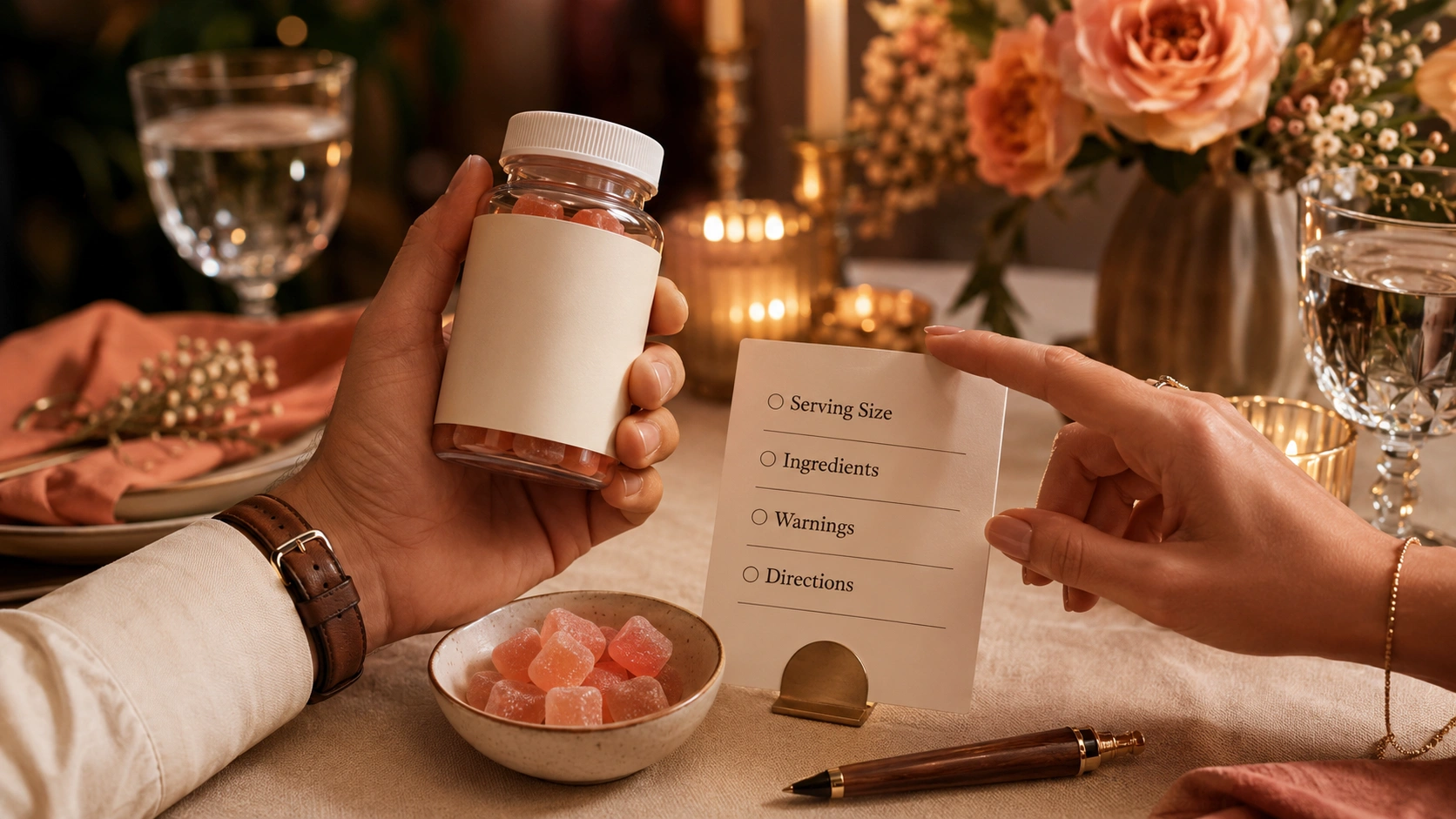
Supplement labels can use certain wellness wording, but there is an important difference between general support language and medical treatment language. The FDA’s explanation of structure/function claims is useful here because it shows why a phrase like “supports mood” is not the same as a claim to treat a sexual health condition.
This distinction matters because sexual wellness concerns are not always simple. Low desire, discomfort, dryness, anxiety, pain, relationship tension, and medication side effects may have different causes. Some need lifestyle changes. Some need better communication. Some need medical review.
The safest way to think about these gummies is simple: they may be a lifestyle supplement for adults, but they are not a guaranteed solution. A responsible reader checks the claim, reads the label, considers personal health, and avoids exaggerated promises.
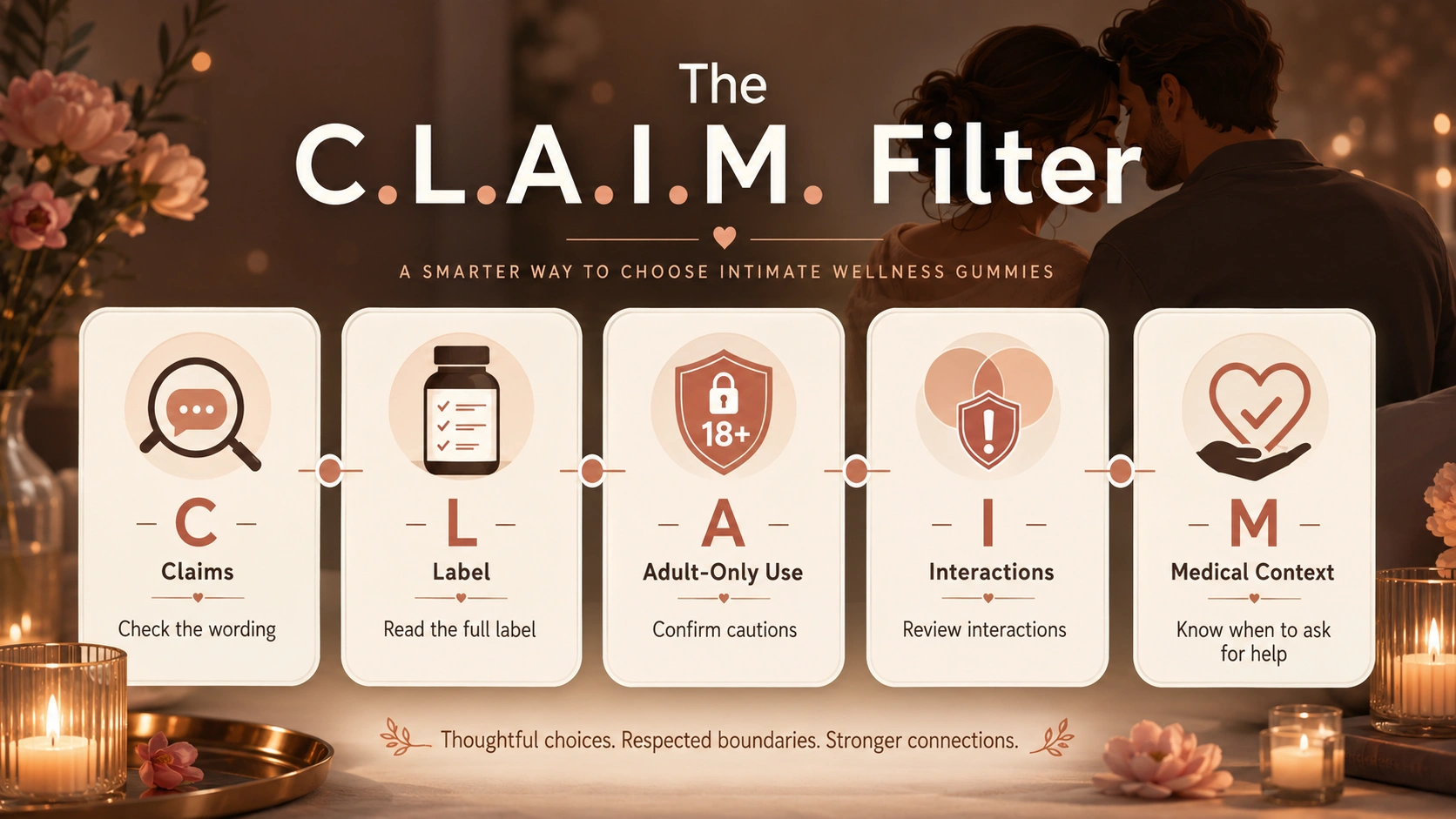
The C.L.A.I.M. Filter for Intimate Wellness Gummies
Use this five-part filter before trying any intimate wellness gummies. It is designed to slow down emotional buying and make the decision more practical.
C — Claims
Read the words carefully. “Supports mood” is different from “fixes low libido.” “Helps you feel relaxed” is different from “treats sexual dysfunction.” If a label sounds medical, compare it with FDA guidance on supplement claim language and avoid products that promise dramatic results without clear evidence.
L — Label
Look for the full Supplement Facts panel, serving size, ingredient amounts, allergen notes, sweeteners, and warnings. The FDA notes that supplement labels should provide important product information, so hidden amounts or vague blends give you less detail for a responsible decision.
A — Adult-Only Use
Intimate wellness products should be clearly meant for adults. The label should also explain who should avoid use, including people who are pregnant, nursing, taking medication, or managing a medical condition.
I — Interactions
Botanical ingredients can interact with medications, alcohol, other supplements, or health conditions. “Natural” does not automatically mean gentle, safe, or appropriate for every person.
M — Medical Context
If the concern is persistent, sudden, painful, emotionally distressing, or linked to a medication change, the issue deserves more than a gummy. Mayo Clinic explains that low sex drive causes can include physical, emotional, lifestyle, medication-related, and relationship factors.
Common Mistakes People Make
The biggest mistake is treating intimate wellness like a one-step purchase. Good sexual wellness is usually more layered. It can involve comfort, trust, stress, sleep, physical health, mental health, and communication.
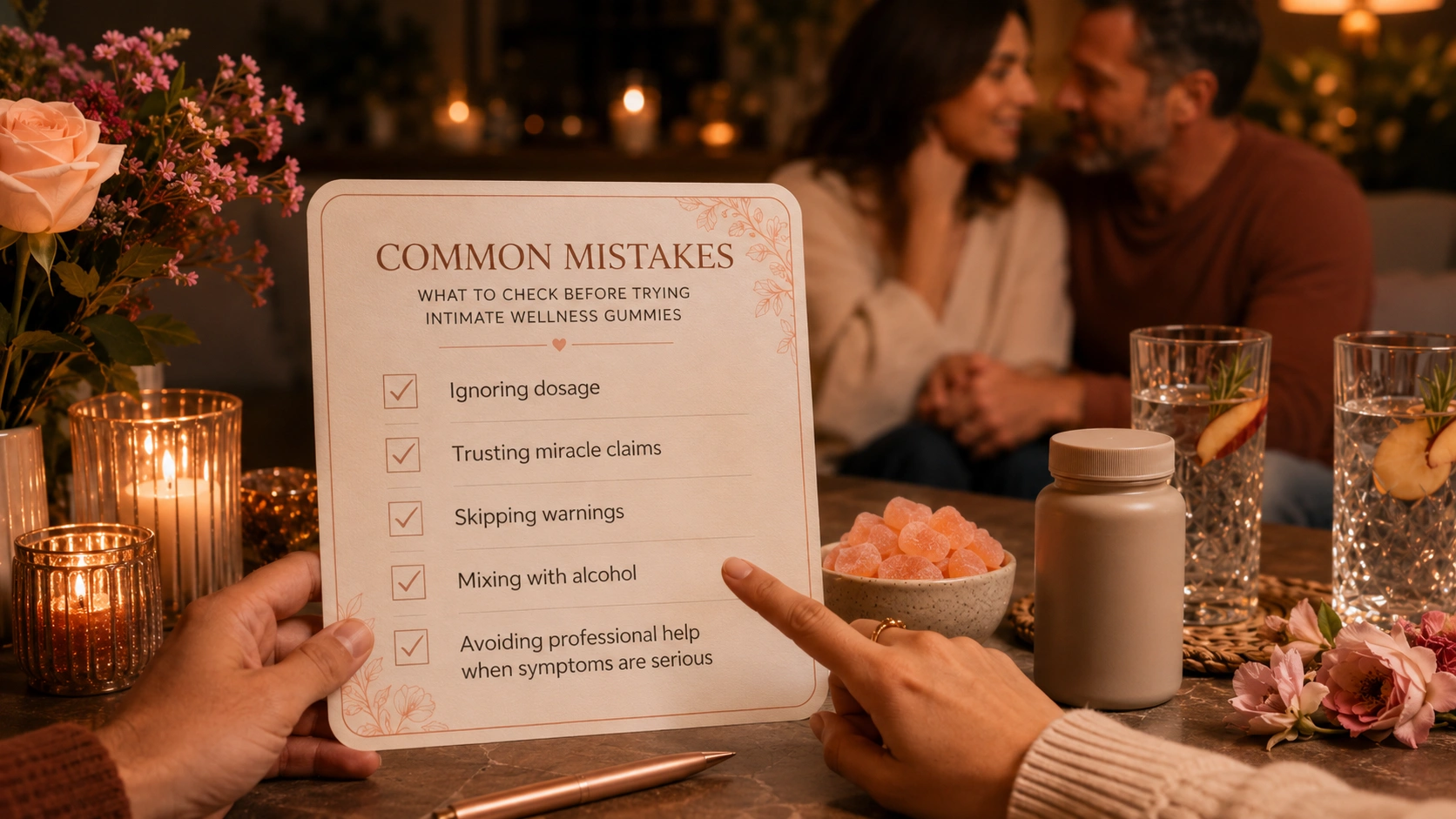
Another common mistake is using a supplement to avoid the real reason desire has changed. Cleveland Clinic’s low libido overview explains that sexual desire can be affected by hormones, stress, pain, mood, medications, pregnancy, childbirth, breastfeeding, and relationship factors. That does not mean every change is dangerous, but it does mean context matters.
| Mistake | Why It Matters | Better Move |
|---|---|---|
| Assuming “natural” means risk-free | Natural ingredients can still cause side effects or interactions. | Check warnings and ask a professional if you take medication. |
| Ignoring dosage | More is not automatically better and may increase risk. | Follow the label and avoid stacking with similar supplements. |
| Believing guaranteed results | Sexual wellness varies from person to person. | Look for realistic language and clear limitations. |
| Using gummies to avoid pain or distress | Pain, sudden changes, or distress can signal an issue that needs care. | Seek medical or therapeutic guidance. |
| Skipping partner communication | Supplements cannot replace trust, consent, and emotional comfort. | Discuss expectations gently and honestly. |
Comparison: Gummies, Lifestyle Habits, and Professional Support
Different situations call for different tools. A gummy may fit a simple lifestyle routine for some adults, but it is not the right answer for every concern.
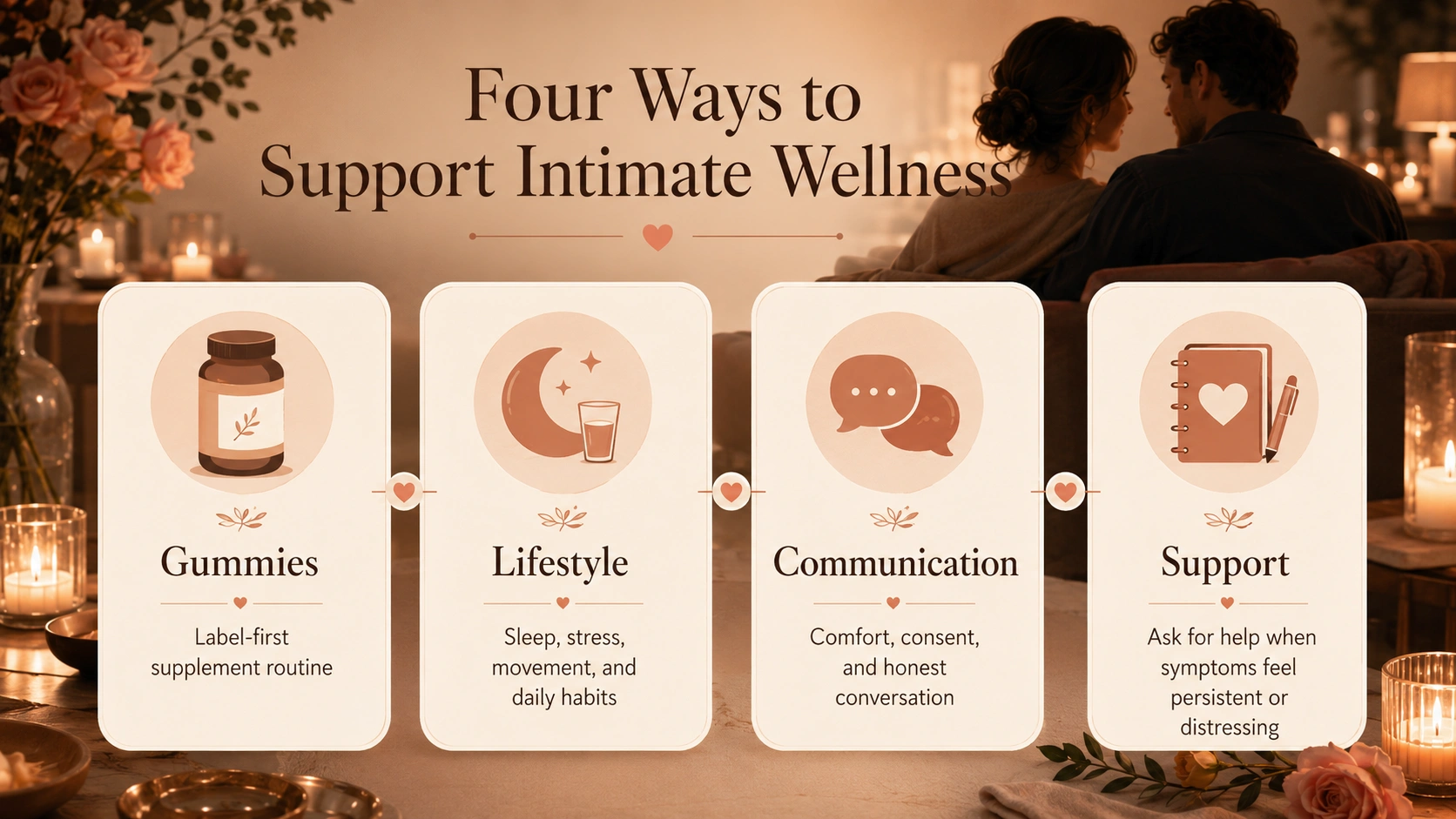
If the issue is mild curiosity, a label-first approach may be enough. If the issue is pain, distress, medication-related change, or ongoing loss of desire, professional support is more appropriate. Mayo Clinic’s information on physical and psychological causes is a good reminder that sexual wellness is not always solved by a single product.
| Approach | What It Can Help With | Limits | Best For |
|---|---|---|---|
| Intimate wellness gummies | May support a planned adult wellness routine when used responsibly. | Not a cure, not a diagnosis tool, and not guaranteed. | Healthy adults who have checked label and safety factors. |
| Lifestyle habits | Stress reduction, sleep, movement, privacy, comfort, and mood. | May take time and consistency. | People whose concern is linked to pressure, fatigue, or routine. |
| Relationship communication | Expectations, consent, emotional closeness, trust, and comfort. | Can feel awkward at first. | Couples who feel disconnected or unsure how to talk about needs. |
| Medical or therapeutic support | Medication side effects, pain, hormonal concerns, anxiety, depression, trauma, or persistent low desire. | Requires a professional appointment. | Anyone with distressing, sudden, painful, or ongoing symptoms. |
Pros and Cons of Intimate Wellness Gummies
Like any wellness product, intimate wellness gummies can have practical advantages and important limitations. The goal is not to treat them as good or bad automatically. The goal is to judge them with context.
Possible Pros
- Easy to take compared with capsules or powders.
- May feel less clinical for adults exploring wellness routines.
- Can encourage people to think more intentionally about intimacy.
- Flavor and format may make the routine feel approachable.
Possible Cons
- Claims can be vague, exaggerated, or hard to verify.
- Some labels may not explain ingredient amounts clearly.
- Sweeteners, acids, herbs, or spices may not suit everyone.
- They can distract from medical, emotional, or relationship causes.
A balanced view matters because the FDA’s consumer supplement information makes clear that supplements are not approved in the same way as drugs before they are marketed. That is why label reading, caution, and personal health context are so important.
Actionable Steps Before Trying Any Gummy
Before trying intimate wellness gummies, slow the decision down. A few minutes of label review can protect you from unrealistic expectations, avoidable side effects, and products that do not fit your personal situation.
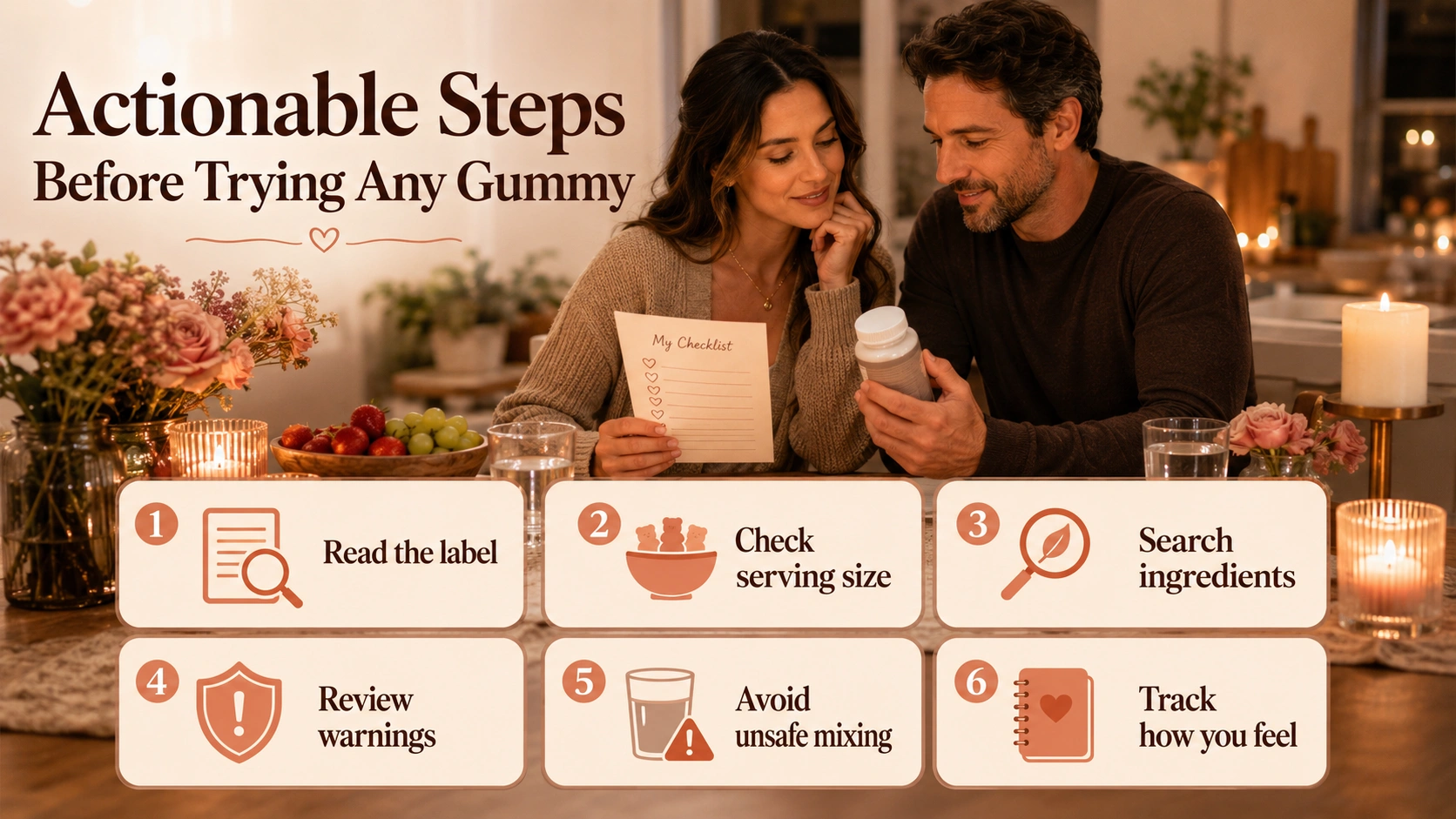
1. Read the front label, then the back label
The front label tells you the marketing angle. The back label tells you the practical details. The back matters more.
2. Check the serving size
Do not guess. Do not double up because you want stronger results. Follow the listed serving and warnings.
3. Search each active ingredient
Look up what each ingredient is commonly used for, what cautions exist, and whether it may interact with medications.
4. Look for testing and manufacturing transparency
Responsible brands usually explain quality controls, ingredient sourcing, and whether third-party testing is available.
5. Avoid alcohol stacking
If a label warns against alcohol, take that seriously. Mayo Clinic notes that too much alcohol can affect sex drive, so alcohol should not be treated as a harmless add-on to intimate wellness routines.
6. Track how you feel
If you try any supplement, note changes, discomfort, mood, digestion, sleep, or unexpected reactions. Stop if something feels wrong.
For more careful guides in this category, visit PromoLatte’s intimate wellness topics and the main PromoLatte homepage for new lifestyle explainers.
When to Get Help Instead of Guessing
Ask a healthcare professional before using intimate wellness gummies if you are pregnant, nursing, trying to conceive, taking prescription medication, using other supplements, managing a heart condition, managing a hormone-related condition, or dealing with anxiety, depression, pain, or sudden changes in desire.

Also seek help if sex is painful, if desire changes suddenly, if the issue causes distress, if there is relationship pressure, or if you suspect medication side effects. Cleveland Clinic explains that low libido may be connected with hormone changes, sexual discomfort, pregnancy, breastfeeding, stress, medications, and relationship factors, which is why a personal health review can be safer than guessing.
Relationship context also matters. NHS guidance notes that relationship problems can be a common factor in loss of libido, so communication, emotional safety, and support may be just as important as any wellness product.
This guide is educational only. It is not medical advice, diagnosis, or treatment guidance.
How This Guide Was Written
This guide was created from a practical consumer-safety perspective. It focuses on label reading, realistic expectations, ingredient awareness, and when professional guidance is safer than guessing.
The article does not claim personal testing, medical advice, guaranteed results, or product outcomes. Sensitive wellness claims are kept cautious and supported with trusted educational sources where relevant.
Safety Note
Sexual wellness and dietary supplements can affect health decisions. Do not use this article as a substitute for medical advice. If you have pain, ongoing distress, medication concerns, pregnancy or nursing questions, or a sudden change in sexual desire, speak with a qualified professional.
FAQs About Intimate Wellness Gummies
Are intimate wellness gummies safe?
They may be appropriate for some healthy adults, but safety depends on the ingredients, dose, personal health, medications, and warnings. Always read the label first and review reliable dietary supplement safety information before using any supplement-style product.
Do libido gummies work for everyone?
No supplement works the same way for everyone. Desire and arousal can be influenced by stress, sleep, health, medication, mood, relationship comfort, hormones, and sexual discomfort.
What should I check on the label?
Check the Supplement Facts panel, serving size, active ingredients, ingredient amounts, allergens, warnings, age limits, pregnancy or nursing cautions, and medication cautions.
Are “natural” intimate wellness gummies always better?
No. Natural ingredients can still cause side effects or interact with medications. The word “natural” should not replace safety checks.
Can I use gummies for low desire?
You should be careful. Low desire can have physical, emotional, medication-related, and relationship-related causes. If it is persistent or distressing, Mayo Clinic’s guide to low sex drive symptoms and causes is a useful reminder to seek proper context.
Should I take intimate wellness gummies with alcohol?
Do not combine them with alcohol unless the label clearly allows it and it is safe for your health. If the label warns against alcohol, follow that warning.
Who should avoid intimate wellness gummies?
People who are under 18, pregnant, nursing, taking medication, managing medical conditions, or sensitive to herbs and supplements should avoid use unless cleared by a professional.
What is the safest first step?
Read the full label, search each active ingredient, check personal cautions, and avoid products that promise guaranteed or medical results.
Final Thoughts
Intimate wellness gummies are best approached with curiosity and caution. The format may feel simple, but the decision still involves ingredients, dosage, warnings, personal health, and realistic expectations.
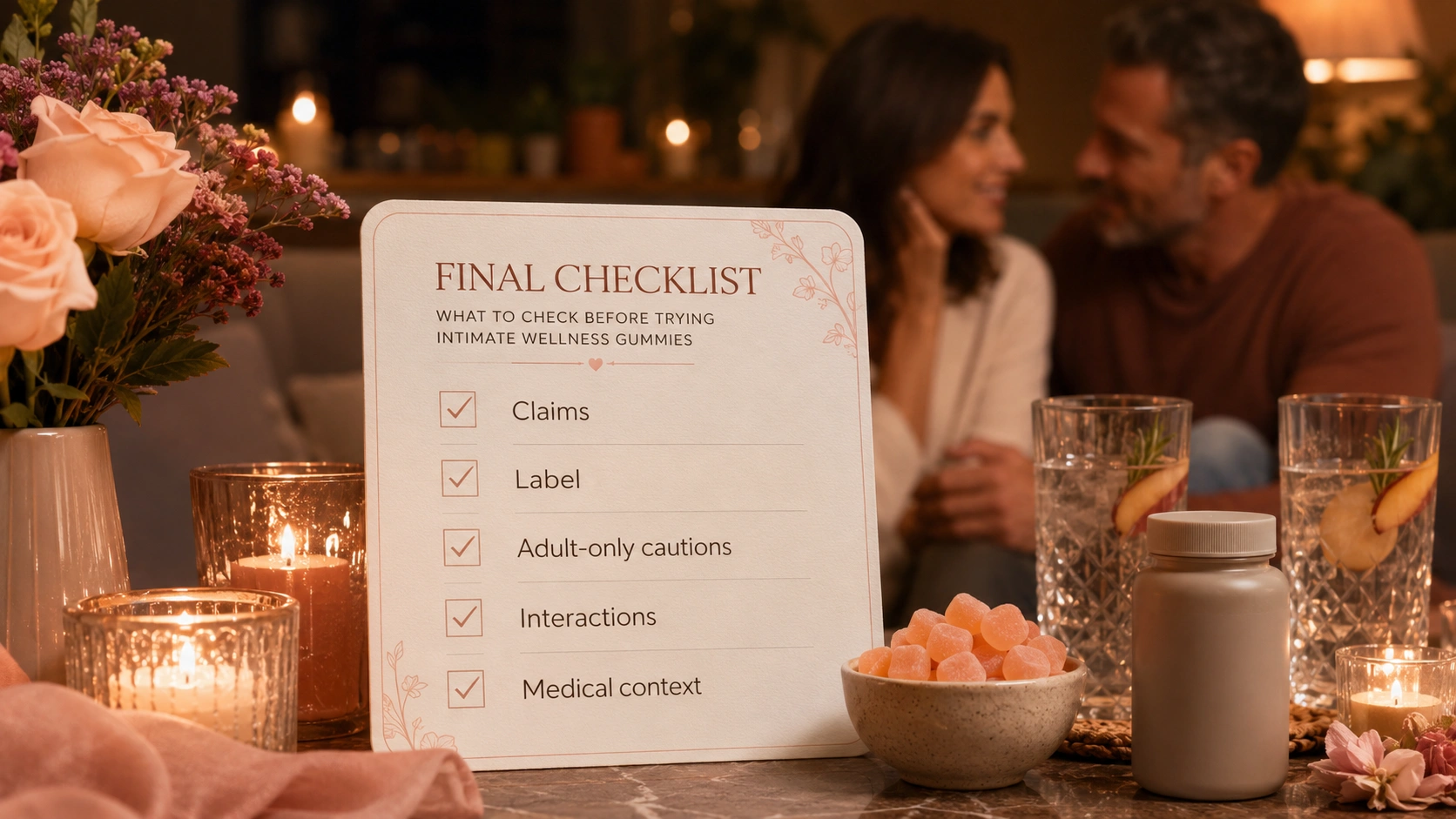
The most useful next step is to use the C.L.A.I.M. Filter: check the claims, read the label, confirm adult-only warnings, consider interactions, and respect the medical context. That gives you a clearer decision than marketing language alone.
Author Bio
Alison Holster writes independent lifestyle and wellness guides focused on practical decisions, clear explanations, and reader-first research. Her work avoids exaggerated claims and keeps sensitive wellness topics grounded in careful, accessible language.
Last updated: June 2026
 ✓
✓