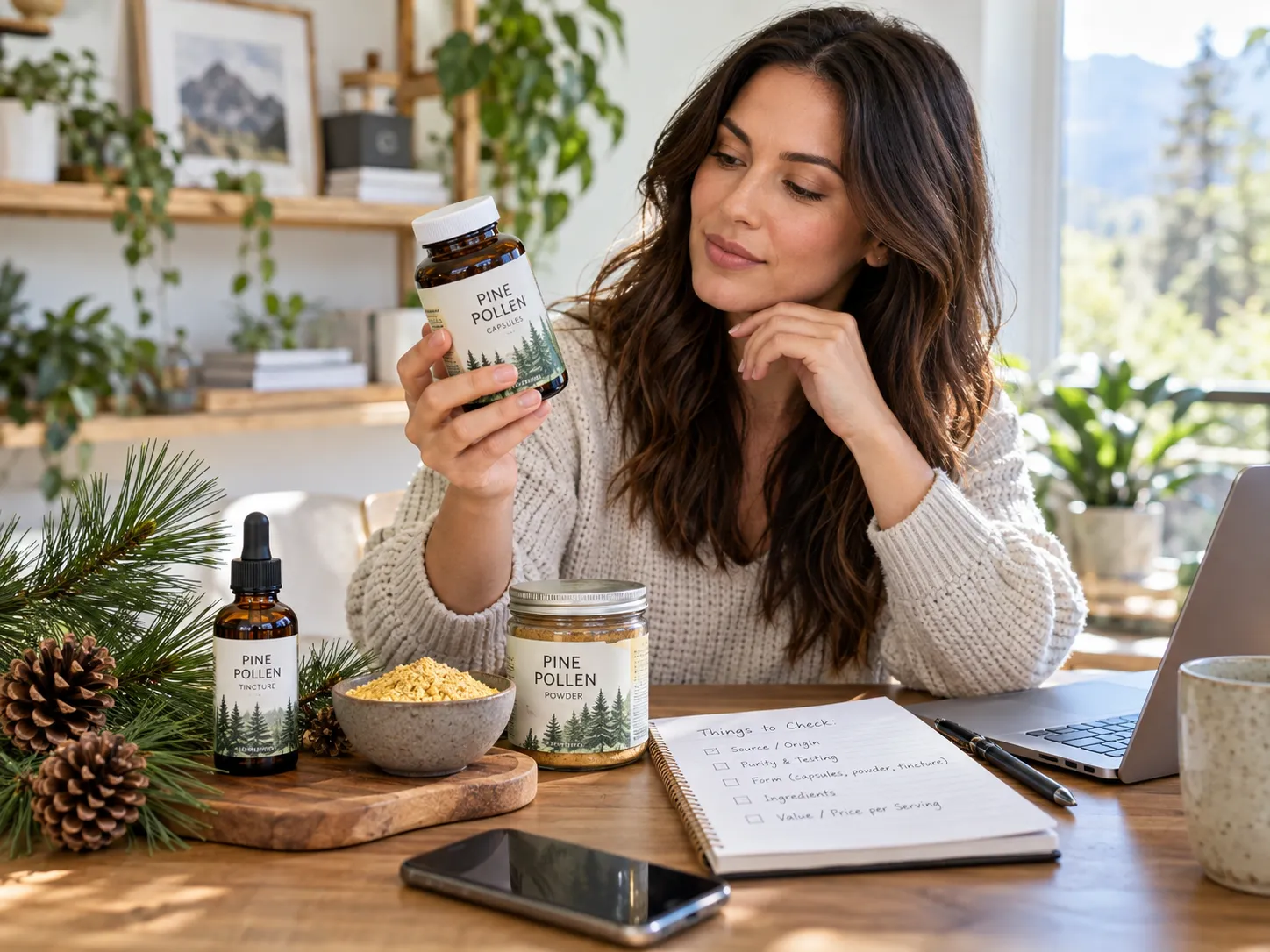

Pine pollen supplements start to get confusing once you compare actual products. One brand emphasizes testosterone. Another promotes cracked-cell-wall powder. Tinctures focus on extraction, while other products lead with sourcing, testing or convenience.
The useful question is not which product makes the biggest promise. It is which differences you can actually verify, and which of those differences matter for the type of supplement you want.
Quick Answer
Before choosing a pine pollen supplement, check its form, botanical species, sourcing, processing method, complete ingredient list, testing information, serving details, allergy warnings and price.
Be more cautious with claims about testosterone, libido, energy or performance. Pine pollen has been studied for its composition and biological properties, but current human evidence is still too limited to assume that a commercial supplement will reliably produce those outcomes. [1]
First, Which Type of Pine Pollen Supplement Do You Want?
Choosing the format first can remove a lot of unnecessary comparisons. Current human evidence does not establish that powder, tincture or capsules are universally better than the others, so practical differences are more useful at this stage.
Powder
Powder may make sense if you prefer a food-style format that can be measured or mixed into food or drinks. Processing information becomes especially relevant here because manufacturers may use different drying and cell-wall treatment methods.
Tincture
A tincture becomes more relevant if you prefer a measured liquid extract. Check whether the extraction base contains alcohol or uses an alternative such as glycerin, because that difference may immediately remove some products from your shortlist.
Capsules
Capsules reduce the need for measuring and avoid much of the taste associated with powders or liquid extracts. The trade-off is that you still need to check how much pine pollen is provided and what form of the ingredient is inside the capsule.
Does “Cracked Cell Wall” Automatically Mean Better?
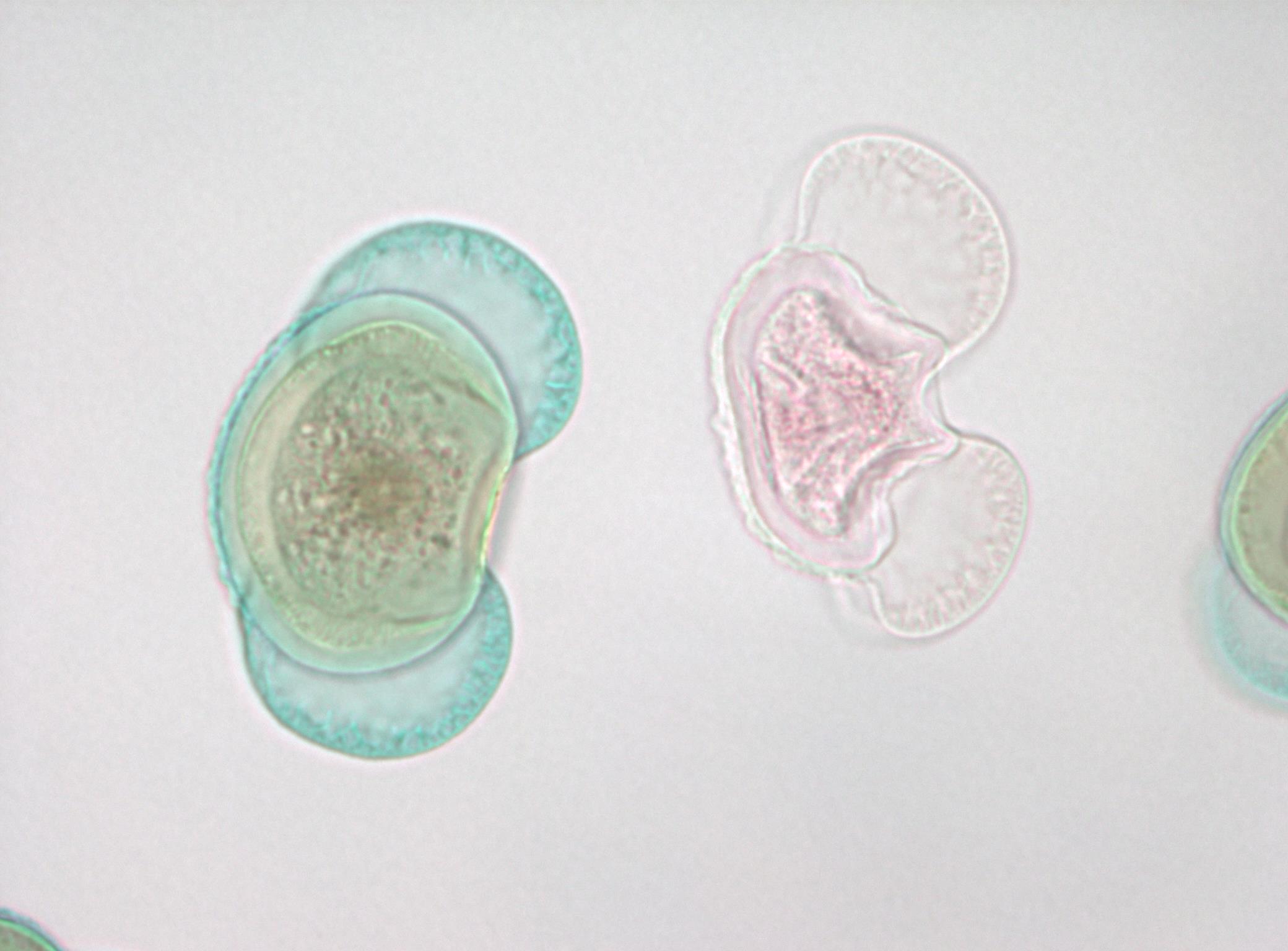
Processing is worth checking, but it should not be treated as proof of better health results. A 2023 scientific review reported that drying, sterilization, wall disruption and other processing techniques can affect pine pollen composition and digestibility. [1]
That makes processing transparency useful. What it does not establish is that one commercial cracked-cell-wall product will raise testosterone, improve energy or outperform another supplement in humans.
So instead of treating “cracked cell wall” as a benefit guarantee, use it as one question in a broader product-quality check.
Why Do the Pine Species and Source Matter?
“Pine pollen” does not describe one perfectly standardized ingredient. Research describes differences in composition across pine species, geographic regions and processing methods. [1]
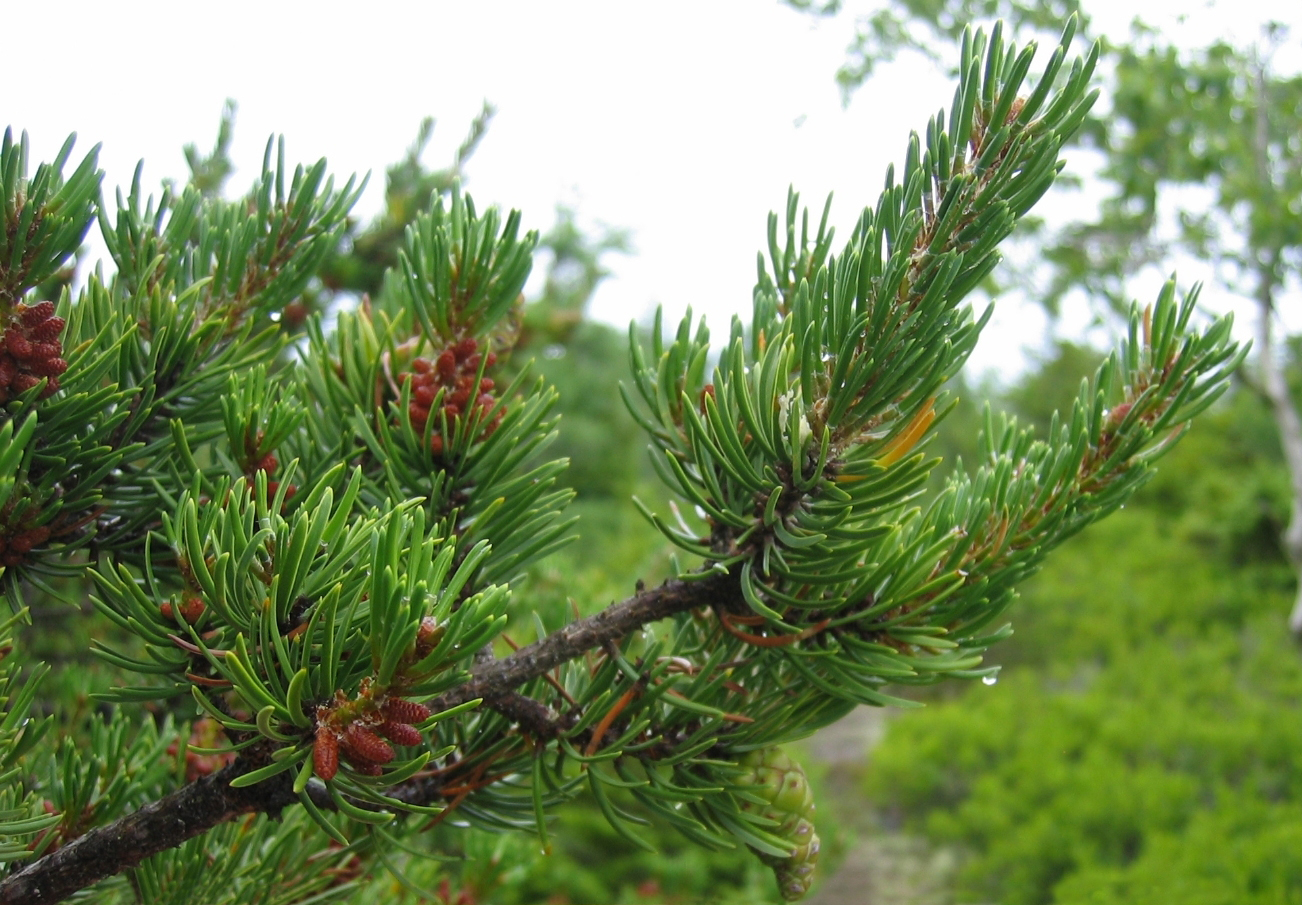
A company that identifies the botanical species and explains where its pollen comes from gives you more specific information than a label that simply says “pine pollen.”
Clear sourcing does not prove better health results. Its practical value is that it gives you something concrete to compare instead of relying only on terms such as “premium,” “potent” or “natural.”
Should Testosterone Claims Influence Your Choice?
Testosterone is one of the most visible claims around pine pollen, but the human evidence remains preliminary.
A small 2024 open-label pilot followed older men using a proprietary Pinus massoniana tincture for eight weeks. Ten participants completed the study. Average testosterone increased, but the testosterone result did not reach the conventional statistical-significance threshold, and the study did not include a placebo-controlled comparison. [3]
That is not enough evidence to conclude that pine pollen supplements generally raise testosterone. It also cannot establish that a powder, capsule or different tincture would produce the same result.
For a buyer, the useful takeaway is straightforward: a stronger hormone claim should not automatically move a product higher on your shortlist.
What Should You Actually Check on the Label?

- Botanical species: Does the brand identify the actual pine species?
- Source: Does it explain where the pollen was harvested or produced?
- Ingredients: Can you see the complete formula rather than only the headline ingredient?
- Processing: Does the company explain how the powder, tincture or extract was prepared?
- Testing: If “third-party tested” is claimed, does the company explain what was tested or provide supporting information?
- Serving: Is the amount per serving clearly stated?
- Warnings: Are allergy and safety statements easy to find?
- Value: Can you compare bottle size, quantity or servings instead of looking only at the front-page price?
None of these points guarantees that a supplement will produce a particular health result. Their value is simpler: they help you compare products using information you can actually verify.
When Should Safety Matter More Than Product Features?
If you have a known pollen allergy or a history of serious allergic reactions, that issue deserves more attention than format, price or customer ratings. Human research has documented pine pollen sensitization and cross-reactivity between pine species. [4]
FDA also explains that dietary supplements are not approved for safety and effectiveness before marketing in the same way as drugs. It advises consumers to discuss supplement use with an appropriate healthcare professional when relevant. [2]
That becomes particularly important if you take medication, have an existing medical condition, are pregnant or breastfeeding, or have significant allergy concerns.
Which Direction Makes Sense From Here?
At this point, you should be able to narrow the decision by format rather than continuing to compare every type of pine pollen product.
If a liquid extract is the format that fits your preferences, the next useful step is comparing tinctures directly. That comparison looks at differences such as sourcing, extraction base, bottle size and buying route.
Compare the Best Pine Pollen Tinctures →
If Boreome is already one of the products on your shortlist, you no longer need another general pine pollen explanation. The more relevant question becomes whether that specific product’s sourcing, formula, cost and evidence limitations fit what you are looking for.
Read the Boreome Pine Pollen Review →
Bottom Line
A useful pine pollen comparison starts with information you can verify: form, botanical species, source, processing, ingredients, testing transparency, serving information, safety and value.
Claims about testosterone, libido, energy or performance require more caution because current human evidence remains limited.
Once you know which format fits your priorities, move to a narrower product comparison instead of continuing to research pine pollen in general. For liquid extracts, see our Best Pine Pollen Tinctures comparison . If Boreome is already your main option, continue with the full Boreome Pine Pollen Review .
Frequently Asked Questions
What is the best type of pine pollen supplement?
Current evidence does not establish one universally best format. Powder, tincture and capsules solve different practical preferences, so choose the format first and then compare products within that category.
Does cracked-cell-wall pine pollen work better?
Wall disruption is a legitimate processing difference and may affect the material’s digestibility or composition. That does not prove that a specific cracked-cell-wall product produces superior health outcomes in humans. [1]
Does pine pollen increase testosterone?
There is preliminary human research, but the available pilot evidence is too limited to conclude that pine pollen supplements reliably increase testosterone. [3]
Sources & References
-
Cheng Y, Wang Z, Quan W, et al. — Pine pollen: A review of its chemical
composition, health effects, processing, and food applications (2023)
Supports composition, species variation, processing and evidence context.
View source -
U.S. Food and Drug Administration — Information for Consumers on Using
Dietary Supplements
Supports dietary-supplement regulation and general consumer safety guidance.
View source -
Wolkodoff NE, Haase GM, Mordkin RM, Beal SG — Pine Pollen Impacts
Testosterone-Related Symptoms in Older Men: A Pilot Report (2024)
Supports the description of the small open-label human pilot and its testosterone findings.
View research paper -
Gastaminza G, Lombardero M, Bernaola G, et al. — Allergenicity and
cross-reactivity of pine pollen (2009)
Supports pine pollen allergy and cross-reactivity context.
View PubMed record
Research checked September 2026. This article is informational and does not replace individualized medical advice.
 ✓
✓