


You may already know you want a sleep gummy. The harder question is whether melatonin fits your sleep problem—or whether a melatonin-free formula makes more sense.
That choice matters if melatonin helps you fall asleep but leaves you groggy, gives you vivid dreams, or does not stop you from waking again. But “melatonin-free” does not automatically solve those problems. Ingredients, dose, and evidence still matter.
Quick Verdict
Choose a melatonin gummy if: your main issue is sleep timing or getting to sleep and you tolerate melatonin reasonably well.
Choose a melatonin-free gummy if: you want to avoid melatonin or dislike how you respond to it—but judge the product by its actual ingredients and doses.
Neither category automatically wins for staying asleep.
What Are You Really Comparing?

Melatonin and non-melatonin gummies are not simply two versions of the same sleep aid. Melatonin is involved in circadian rhythm and sleep-wake timing. NCCIH notes that it may reduce sleep-onset latency in some people, although benefits are not equally clear across every sleep problem.[1]
“Melatonin-free” only tells you what is missing. One gummy may contain magnesium, another L-theanine, while another may use reishi, valerian, chamomile, ashwagandha, or several ingredients together.
So the useful comparison is melatonin versus the specific alternative formula you are considering.
If Your Main Problem Is Falling Asleep, Which Makes More Sense?

If you spend a long time waiting for sleep to begin, melatonin has the clearer connection to sleep timing. Research summarized by NCCIH suggests it can shorten the time it takes some people to fall asleep.[1]
That does not make melatonin a guaranteed answer, but it gives it a more direct role when sleep onset is the main problem.
A melatonin-free formula can still be relevant when its ingredients target something different. L-theanine, for example, showed improvements in some subjective sleep outcomes in a 2025 systematic review and meta-analysis, although researchers noted important limitations.[4]
What If You Fall Asleep but Wake Up Again?

Falling asleep and staying asleep are different outcomes. NCCIH summarizes research in which melatonin improved sleep-onset latency without clearly reducing time awake during the night.[1]
That matters if your pattern is “I fall asleep fine, but I am awake again at 2 or 3 a.m.” More melatonin does not prove you will stay asleep longer.
A melatonin-free gummy is not automatically the solution either. Magnesium is widely promoted for sleep, yet NCCIH says evidence for insomnia and other sleep disorders remains limited and conflicting.[5]
The better question is whether the formula matches the sleep problem you are trying to solve.
What If Melatonin Works but Makes You Groggy or Gives You Vivid Dreams?

Morning grogginess is one of the clearest reasons people consider alternatives. Mayo Clinic lists daytime drowsiness among possible melatonin side effects, along with headache, dizziness, nausea, and less commonly vivid dreams or nightmares.[2]
Those effects are not universal. Some people experience them and others do not, so treat them as possible trade-offs rather than expected outcomes.
If melatonin repeatedly leaves you feeling poorly the next morning, avoiding it can be reasonable to investigate. But “no melatonin” does not mean “no grogginess.” The rest of the formula still matters.
Do Melatonin-Free Sleep Gummies Actually Work?

The answer depends on what is inside them.
Magnesium
Magnesium is common in non-melatonin products, but NCCIH says there is not enough rigorous evidence to determine whether magnesium supplements are effective for insomnia or other sleep disorders.[5]
A magnesium label alone is not proof that a gummy will improve sleep.
L-Theanine
L-theanine has a more encouraging recent research signal. A 2025 meta-analysis found improvements in some subjective sleep outcomes while also highlighting the need for better research on pure L-theanine, dose, and duration.[4]
Herbs and Botanical Blends
Valerian, chamomile, passionflower, lemon balm, reishi, ashwagandha, and other ingredients can appear in melatonin-free formulas. Do not treat “natural sleep blend” as evidence. Check what is included, the amount used, and how strong the evidence is.
What Should You Check Before Buying Either Type?

- Active ingredient and dose: know what you are actually taking.
- Third-party testing or certification: this can provide another quality signal.
- Proprietary blends: vague blends can hide ingredient amounts.
- Medication interactions: melatonin can interact with medicines, while other supplements may also create concerns.[3]
- Label accuracy: do not assume every gummy perfectly matches its label.
A 2023 JAMA analysis tested 25 U.S. melatonin gummy products and found 22 were inaccurately labeled in that sample. Among products containing melatonin, measured quantities ranged from 74% to 347% of the labeled amount.[6]
The sample was small and should not be generalized to every brand, but it gives buyers a reason to value transparent labels and independent quality checks.
Which Type Fits You Better?
A Melatonin Gummy May Fit Better If:
- Your main issue is falling asleep or sleep timing.
- You already tolerate melatonin reasonably well.
- Grogginess or vivid dreams are not significant problems for you.
- The product clearly discloses its melatonin dose.
A Melatonin-Free Gummy May Fit Better If:
- You specifically want to avoid melatonin.
- Melatonin gives you unwanted effects.
- You understand what alternative ingredient the formula relies on.
- The product lists meaningful ingredient amounts rather than a vague sleep blend.
Neither May Be the Right Next Step If:
Your sleep difficulty is persistent, severe, or repeatedly disrupts the night. NCCIH notes that current guidance does not support routine melatonin use for chronic insomnia based on available evidence, while cognitive behavioral therapy for insomnia remains strongly recommended.[1]
Compare Specific Sleep Gummies
Once you know which direction makes more sense, compare the actual formula, dose, price, and trade-offs of individual products.
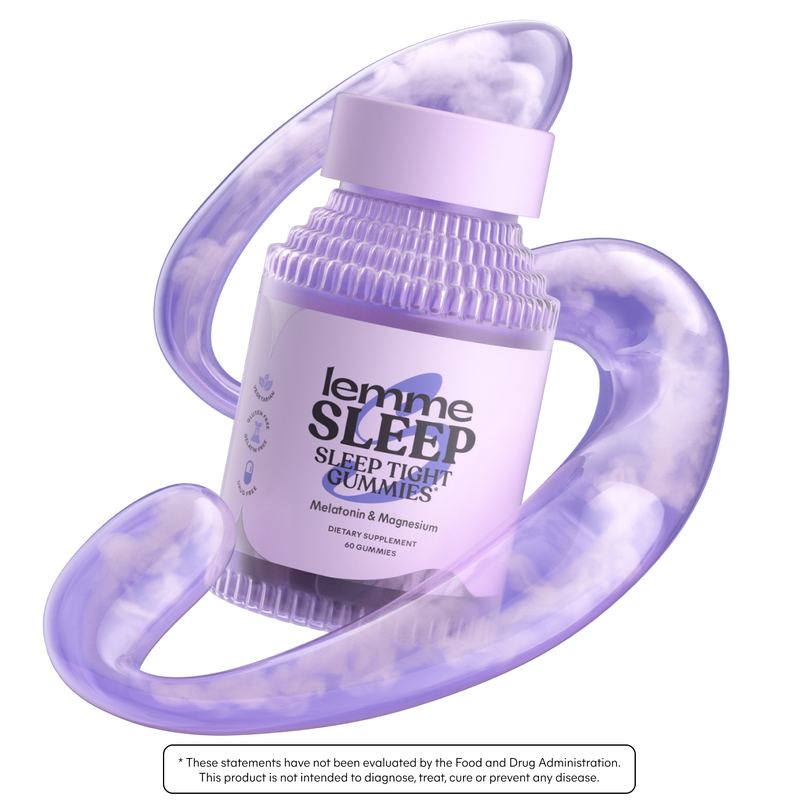
Lemme Sleep Gummies
A melatonin-based option combining 5 mg melatonin, 50 mg L-theanine, 20 mg magnesium, and a botanical blend per full serving.[7]
$30 Buy once · 30 servings $26 Monthly Delivery
- 5 mg melatonin per two-gummy serving
- Includes magnesium and L-theanine
- Vegetarian and gelatin-free
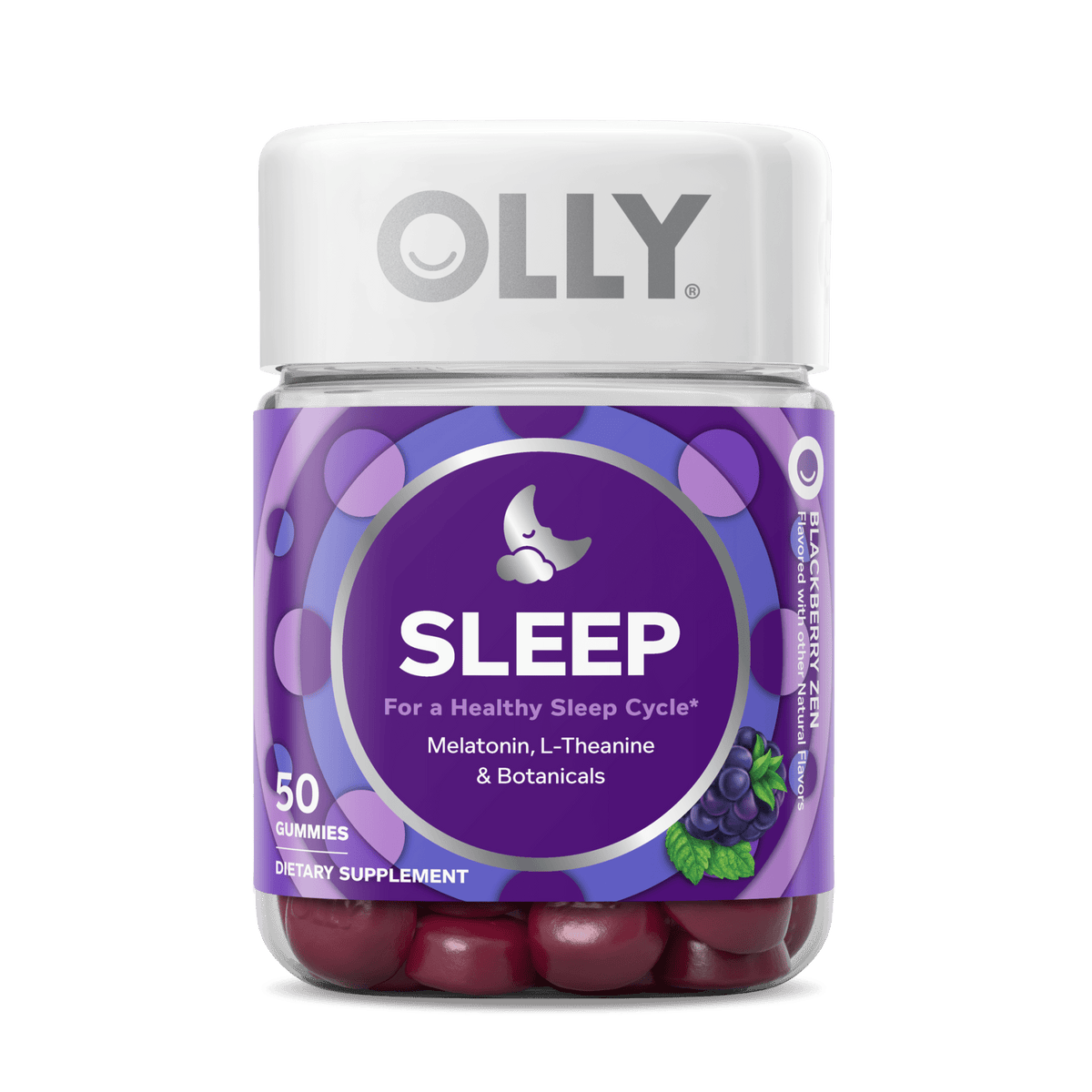
OLLY Sleep Blackberry Zen
A lower-dose melatonin option with 3 mg melatonin, L-theanine, and botanical extracts per two-gummy serving.[8]
$13.99 Official listed price · 25 servings · retailer price may vary
- 3 mg melatonin per two gummies
- Includes L-theanine and botanicals
- Lower upfront price than Lemme
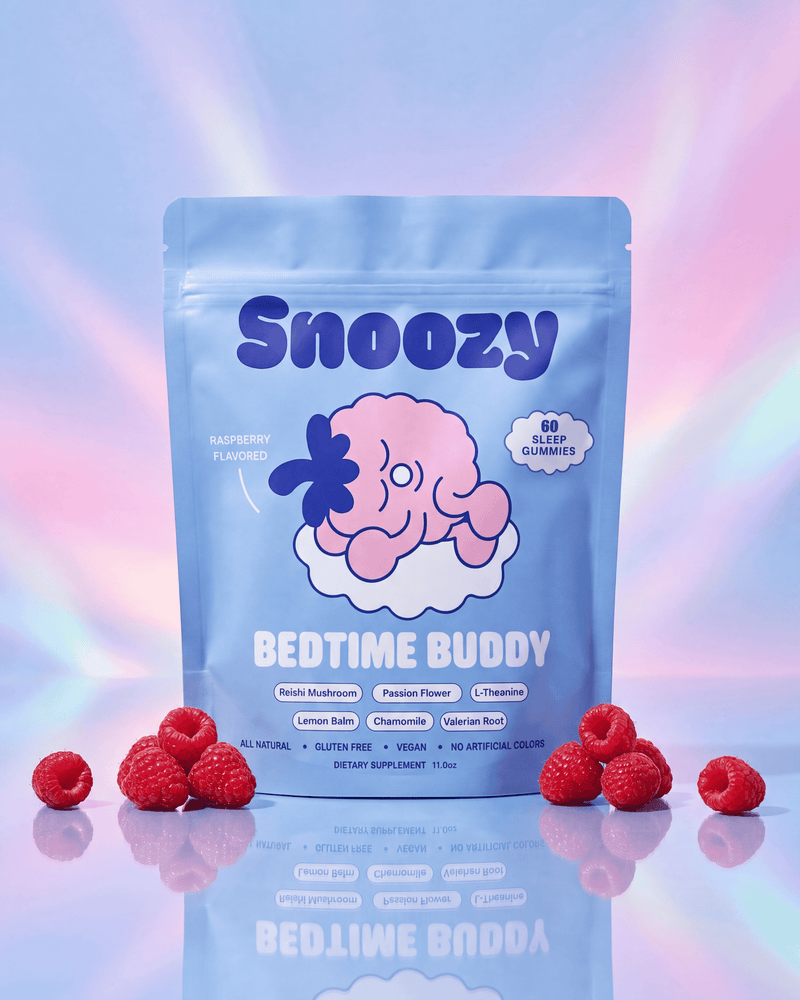
Snoozy Bedtime Buddy
A melatonin-free and cannabis-free botanical option using reishi, L-theanine, valerian root, passionflower, lemon balm, and chamomile.[9]
$45.75 Buy once · 60 gummies $36.75 Subscribe & Save
- No melatonin
- No THC, CBD, or CBN
- Botanical + L-theanine formula
For a deeper product comparison, read our Lemme Sleep vs OLLY Sleep comparison, Lemme Sleep Gummies review, or Snoozy sleep gummies review.
Final Verdict
Melatonin gummies and non-melatonin sleep gummies are not identical solutions. Melatonin has a clearer role when sleep timing or falling asleep is the main issue. A melatonin-free formula becomes more relevant when you want to avoid melatonin or dislike how you respond to it.
Choose the sleep problem first, then the category, then the product. Compare the ingredient evidence, dose, quality signals, price, and trade-offs before deciding.
FAQ
Are Non-Melatonin Sleep Gummies Better Than Melatonin Gummies?
No category is universally better. The right fit depends on your sleep problem, the ingredients used, the evidence behind them, and how you respond to melatonin.
Which Is Better for Staying Asleep?
Neither category has a guaranteed advantage. Melatonin has clearer evidence around sleep onset than sleep maintenance, while many alternative ingredients have limited or formula-specific evidence.[1]
Can Melatonin Gummies Make You Groggy the Next Day?
Daytime drowsiness is a recognized possible melatonin side effect, although it does not happen to everyone.[2]
Sources & References
-
National Center for Complementary and Integrative Health — Sleep Disorders and Complementary Health Approaches
Evidence on melatonin, sleep onset, sleep maintenance, chronic insomnia, magnesium, and complementary approaches.
View source -
Mayo Clinic — Melatonin Side Effects: What Are the Risks?
Possible melatonin side effects including daytime drowsiness, headache, dizziness, nausea, vivid dreams, and nightmares.
View source -
Mayo Clinic — Melatonin
Melatonin safety information and potential medication interactions.
View source -
Sleep Medicine Reviews — The Effects of L-Theanine Consumption on Sleep Outcomes
2025 systematic review and meta-analysis of L-theanine and sleep outcomes.
View source -
NCCIH — Magnesium Supplements for Sleep Disorders
Summary of limited and conflicting evidence for magnesium and sleep disorders.
View source -
JAMA — Quantity of Melatonin and CBD in Melatonin Gummies Sold in the US
Laboratory analysis of melatonin content and label accuracy in 25 tested U.S. gummy products.
View source -
Lemme — Lemme Sleep Gummies
Current ingredient amounts, serving information, and listed pricing.
View source -
OLLY — Sleep Blackberry Zen
Current formula, serving information, and listed pricing.
View source -
Snoozy — Bedtime Buddy
Current botanical formula, melatonin-free positioning, pack size, and listed pricing.
View source
 ✓