


Your toddler wants to walk. Five minutes later, they want to be carried. Then they want down again. And before you reach the car, they want back up.
If this is your problem, you do not simply need the “best toddler carrier.” You need a carrier that fits short, stop-and-start carries.
That changes what matters. A sling, hip seat and full structured carrier can all carry a toddler, but they do not make the same job easy.
For a toddler who walks, wants up, then wants down again, a simple hip sling or hip seat often makes more sense than putting on a full carrier for every short carry. Current carrier guides and products are built around this exact walk-then-carry use case. [1] [2]
But if you expect to carry your toddler for a long walk, a structured carrier is usually the better type because it gives more body support. [3]
Why Short Toddler Carries Need a Different Kind of Carrier
The problem here is not that your toddler cannot walk. The problem is that you do not know when the next carry will start or how long it will last.
Boba describes this as the “up, down, up again” stage and says speed and easy transitions become more important when a walking toddler wants frequent changes between walking and carrying. [1]
This is also a real product use case, not something made up for this article. Gooseket says its toddler carrier is made for children who switch between walking and being carried, with quick use for errands, walks and travel. [2]
So for this specific stage, the question becomes: how much setup and support do you actually need for each carry?
What Should Matter Most for Stop-and-Start Carries?
For this use case, we would focus on four things:
Fast on and off: If your child wants down again quickly, a carrier should not take longer to manage than the carry itself.
Easy to keep with you: A small carrier is more useful when it can stay in your diaper bag, stroller or car.
Enough support for the time you use it: More support is useful, but more structure can also mean more bulk.
Comfort for your body: A fast carrier is not a good choice if its weight pattern does not feel right for you.
Babylist makes the same basic distinction: hip slings are lighter and less bulky, while hip seats add more structure; for longer, more hands-free carrying, a full structured carrier serves a different job. [3]
Hip Sling: Best When Speed and Size Matter Most

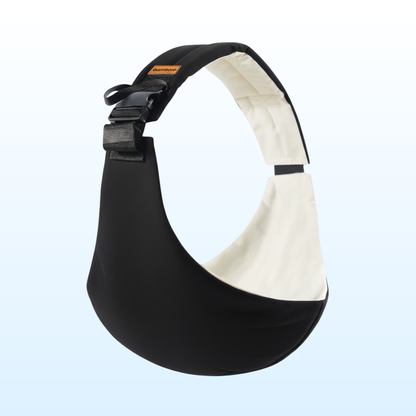
A hip sling is the simplest of the three options. It supports your child on your hip without the full body panel and two-shoulder setup of a structured carrier. [3]
This makes the most sense when your carries are short and random.
Think about a checkout line, walking from the car to daycare, a short airport line, or the last part of a walk when your toddler suddenly refuses to take another step.
The trade-off is support. Many hip slings work as carry assists, not as full hands-free carriers. [3]
Think Bambora Fits Your Situation?
If short, repeated carries are your main problem, the next step is checking whether Bambora’s real limits also fit you.
Hip Seat: Better When You Want a More Solid Place to Sit
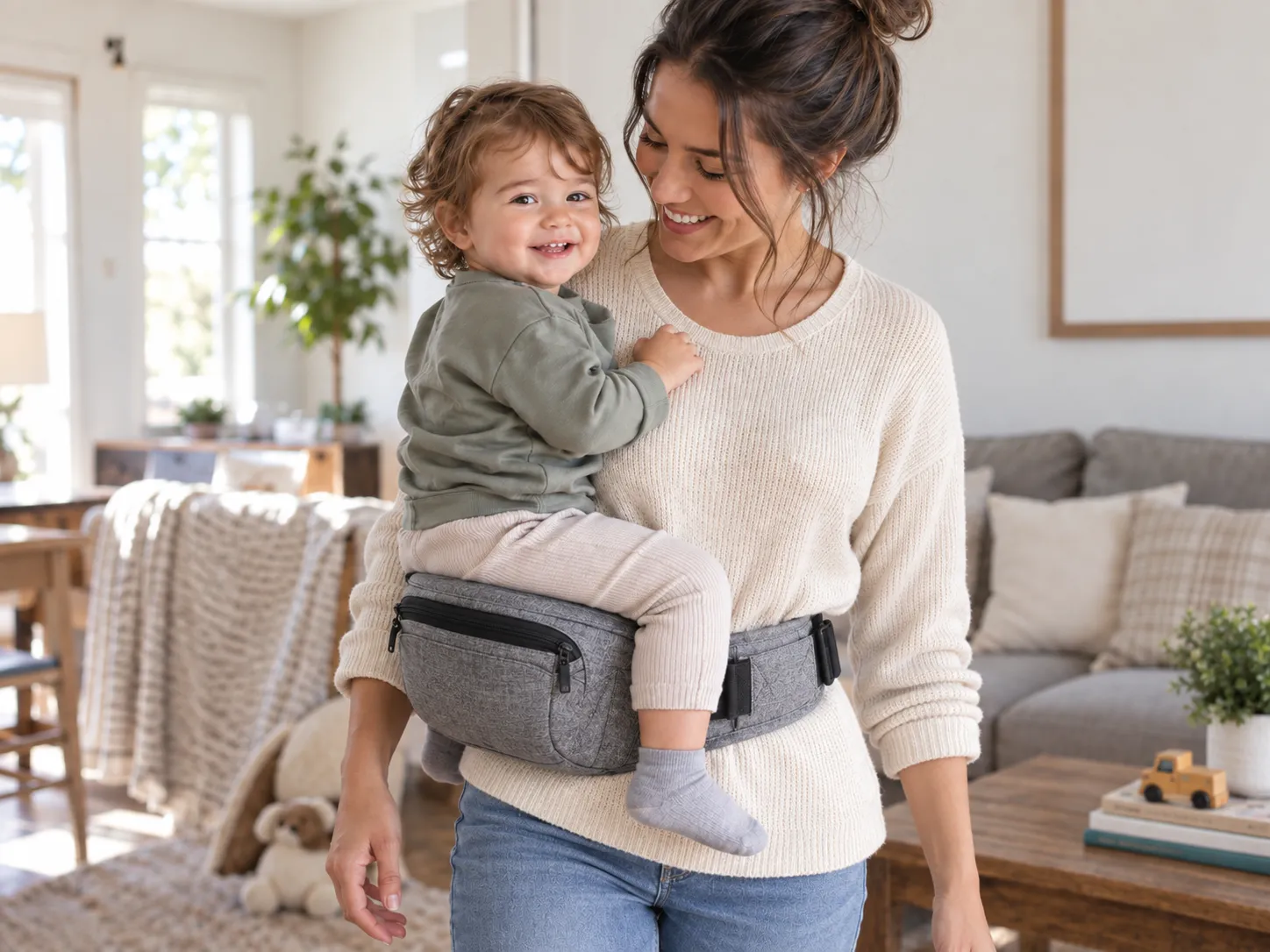
A hip seat uses a more structured seat or shelf under your child. Babylist notes that this gives it more structure than a simple hip sling, but it also makes the carrier larger and less easy to pack away. [3]
That can be a useful trade if your child wants frequent pick-ups but you prefer a firmer seat under them.
Ergobaby also positions hip seats around quick toddler ups and downs, while describing compact slings as the more grab-and-go choice. [4]
Structured Carrier: Better When the Carry Stops Being Short
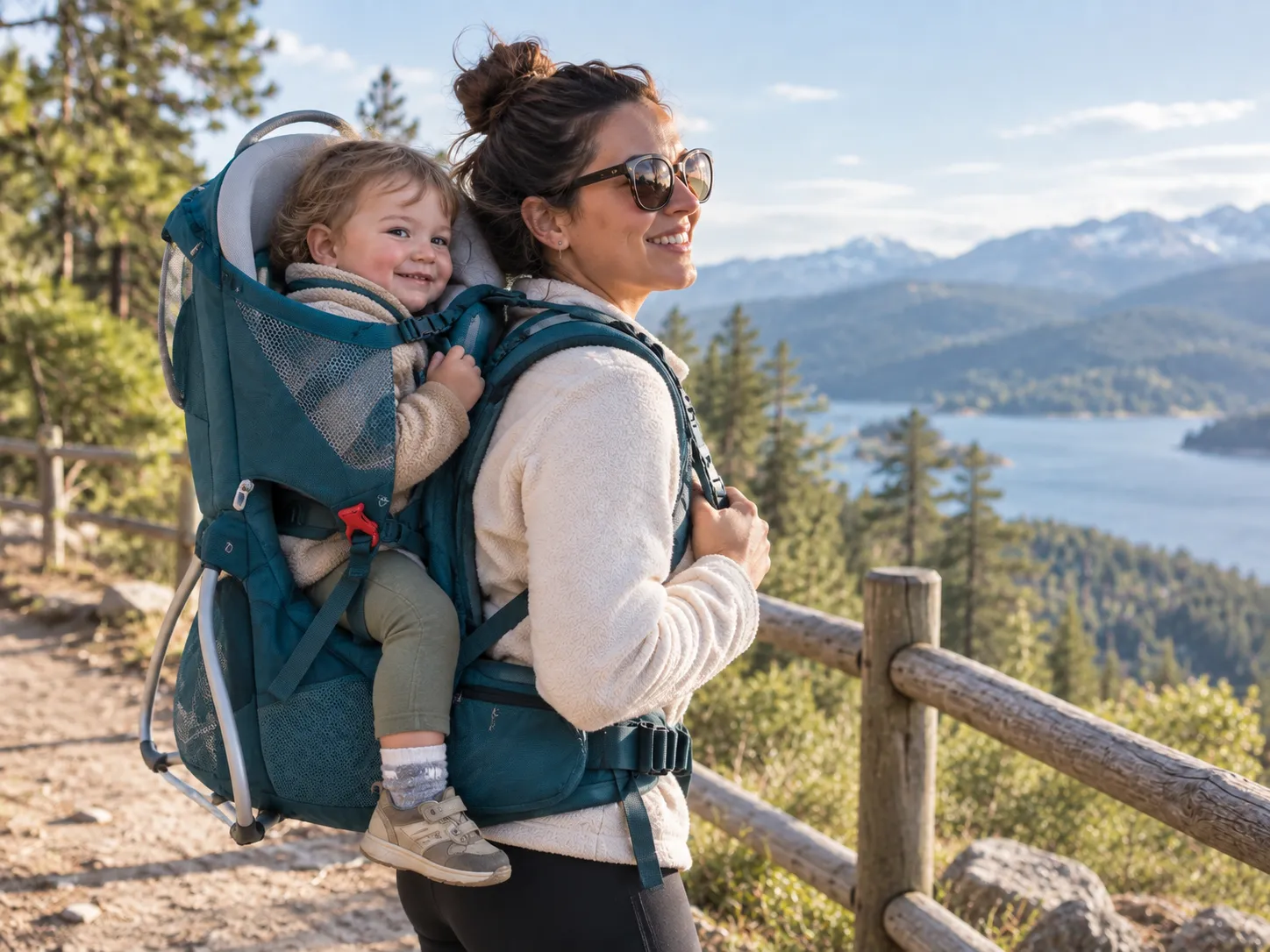
A structured carrier solves a different problem.
If your toddler is likely to stay up for a long walk, sightseeing trip or other extended carry, support starts to matter more than fast in-and-out use.
Babylist notes that hip slings and hip seats are mainly useful for short carrying support, while structured carriers or wraps are better suited to extended babywearing. [3]
The cost is more setup and more carrier to wear or pack. That may be worth it for a long carry, but less useful when your toddler wants down again almost as soon as you put them in.
Which Carrier Type Fits Your Situation?
| Your Situation | Best Starting Point | Why |
|---|---|---|
| Toddler walks, then wants frequent short carries | Hip sling | Small, quick and easy for repeated ups and downs |
| You want quick carries but prefer a firmer seat | Hip seat | More structure under the child |
| You need a carrier that is easy to keep in a bag | Hip sling | Usually the least bulky option |
| You expect a long continuous carry | Structured carrier | Better suited to longer support |
| You need strong hands-free support | Structured carrier | A simple carry-assist may not meet that need |
Our Recommendation for the Walk-Then-Carry Stage
If your toddler can walk but keeps asking to be carried for short parts of an outing, start by looking at a hip sling or hip seat — not the biggest carrier you can find.
Choose the hip sling if speed, small size and easy up-and-down use matter most.
Choose the hip seat if you want a firmer seat and do not mind more bulk.
Choose a structured carrier if those “short carries” regularly turn into long ones.
There is no honest “best carrier” for all three jobs. The best type depends on what happens after your toddler says “carry me.”
Quick Sling Looks Right?
See where Bambora works well, where it does not, and who we think should skip it before you buy.
Check Our Bambora Verdict →Bambora or Qookie Go?
Bambora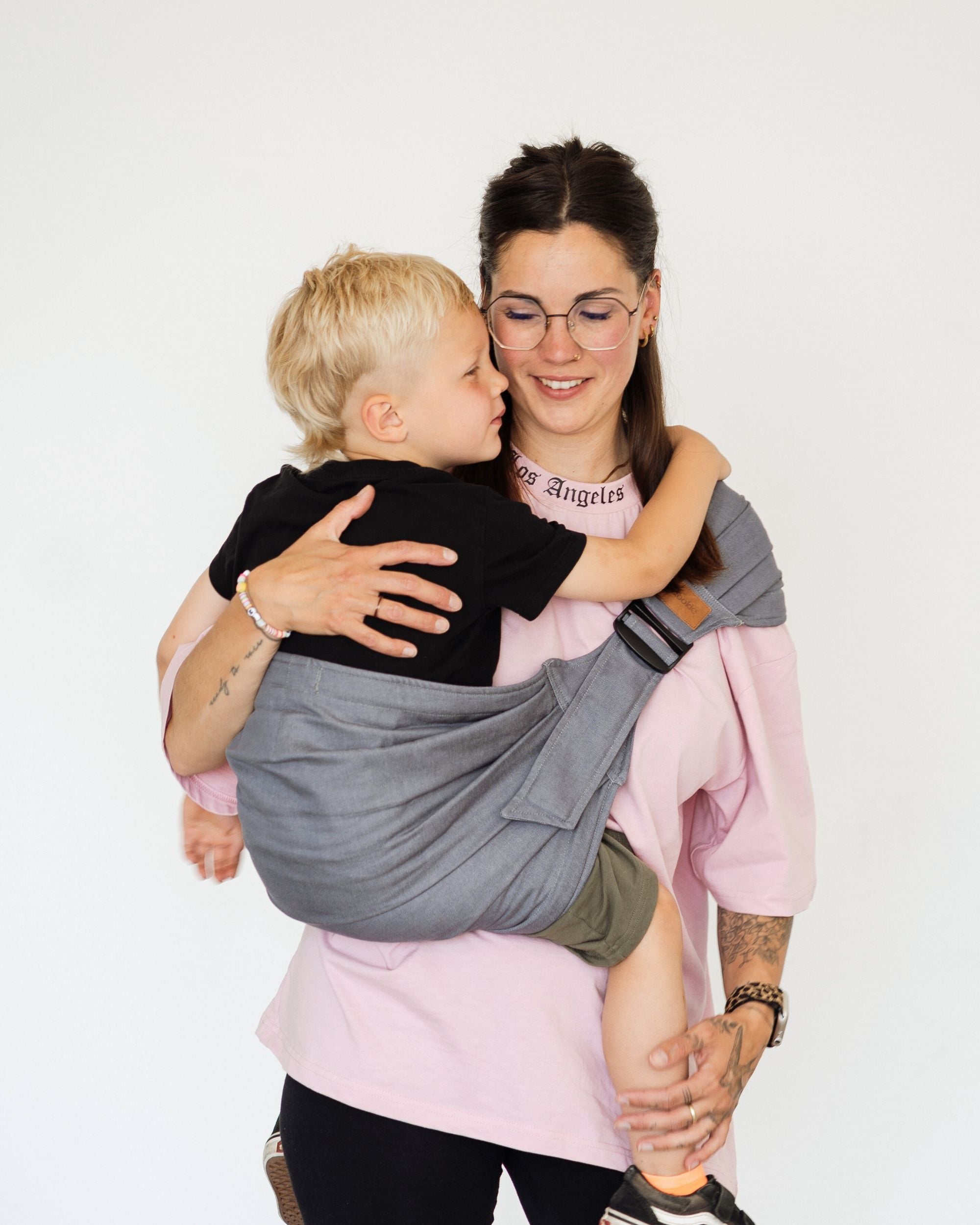 Qookie Go
Sources & references
- [1] Boba — The “Up, Down, Up Again” Stage: A Guide to Carrying a Toddler Open source ↗
- [2] Gooseket — 365 Toddler Carrier: Everyday Ups & Downs Open source ↗
- [3] Babylist — What Is a Hip Sling Carrier? How It Works for Babies and Toddlers Open source ↗
- [4] Ergobaby — What Are Ergobaby Hip Seats & Slings — and Who Are They Best For? Open source ↗
 ✓
✓