
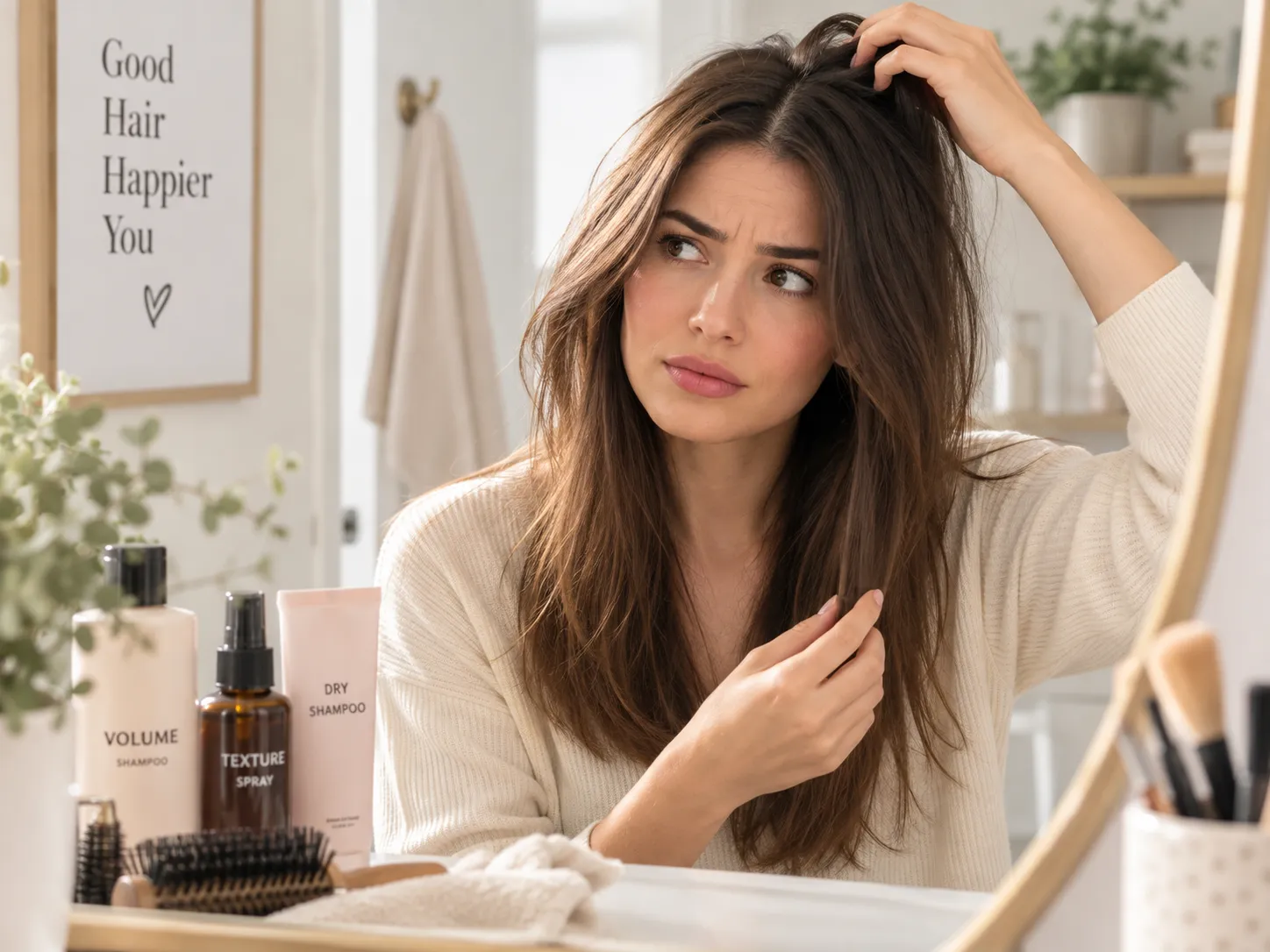

Your hair looks light and full after washing. Then you try to fix one small problem: oil on the dry ends, texture for hair that feels too soft, or something at the roots for more lift. Instead of improving the style, the extra product leaves your hair flatter, coated, or separated into greasy-looking strands.
If that keeps happening, the useful question is not simply “Which product should I buy?” It is “Which part of my hair actually needs help?” Fine hair can still need moisture, grip, and volume. The problem is often using too much, putting it in the wrong place, or trying to solve several different needs with the same product.
What Does “Weighed Down” Mean for Your Hair?
For one person, weighed-down hair means the roots lose volume within a few hours. For someone else, the roots are fine but oil makes the ends separate into thin strands. A texture product can also technically add grip while leaving the hair feeling dirty or gritty.
Those are different problems, so they should not automatically get the same solution. Hair.com notes that heavier formulas and excess product around the roots can contribute to fine hair falling flat. Allure’s fine-hair guidance makes a similar distinction: fine hair may still need hydration, but richer formulas can easily become too much. [1] [3]
Which Part of Your Hair Is Actually Giving You Trouble?
| What you notice | What to consider | Useful direction |
|---|---|---|
| Your roots look good after styling but quickly lose lift or start looking oily. | Keep the solution close to the root instead of layering more product through the lengths. | Targeted root texture or volume. |
| Clean hair feels too soft, fluffy, poofy, or difficult to shape. | You may need grip or texture rather than more root volume. | A small amount of texture product. |
| Your ends feel rough or frizzy but normal oils quickly make them look greasy. | Use less product and keep it on the driest part of the hair. | Lightweight targeted moisture. |
| Almost every styling product leaves the hair coated. | Adding another product may not be the answer. | Simplify and check for buildup first. |
The main point is simple: solve the problem where it is happening. Matrix uses the same general logic in its guidance for fine hair with oily roots and dry ends, keeping richer moisture away from the root area while targeting conditioning and oil toward the lengths and ends. [2]
If the Problem Is Flat Roots, Keep the Fix at the Roots

Say your hair has enough softness through the lengths, but the crown drops by midday. Adding more oil, cream, or styling product through the whole head does not address that specific problem.
A root-focused product is the more logical category to investigate. Harmonize Beauty positions its Root Texturizing Powder for root lift, grip, oil absorption, and buildable hold. Its directions also tell users with fine hair to concentrate the product at the roots and start with a small amount. [4]
Those are manufacturer claims, not proof that the product will work the same way for everyone. But the usage method makes sense for this situation: if the problem is at the roots, do not coat the dry ends just to create root lift.
Open the full review if your main issue is roots that lose lift or start looking oily. It looks at what the powder is designed to do, the trade-offs, and when this type of product makes more sense than simply adding more styling product.
Check the Harmonize reviewIf Clean Hair Feels Too Fluffy, You May Need Texture — Not More Volume

There is another common-looking situation that is actually a different problem. Your hair is freshly washed and not especially oily, but it feels too soft, fluffy, or poofy to sit the way you want.
Here, the goal is not necessarily more root height. You are trying to add enough grip and control to make clean hair feel more lived-in.
California Born describes Days of Dirt as a grooming cream for dry, fluffy, frizzy, freshly washed hair that needs more texture. That puts it in the right category for this problem. [5]
But this is where the trade-off matters. The formula includes ingredients such as olive oil, shea butter, and jojoba oil, and California Born’s own review summary notes that some customers found the product greasy or unsuitable for their hair texture. [5]
For fine hair, that makes the amount especially important. Starting with less gives you room to add more. Starting with too much leaves fewer options if the hair already feels coated.
This review is most relevant if your hair feels too clean, soft, fluffy, or difficult to shape after washing. If greasy roots are already your main problem, this is probably not the first route to investigate.
See the Days of Dirt reviewIf Your Ends Are Dry but Oil Makes Them Greasy, Change Where You Apply It
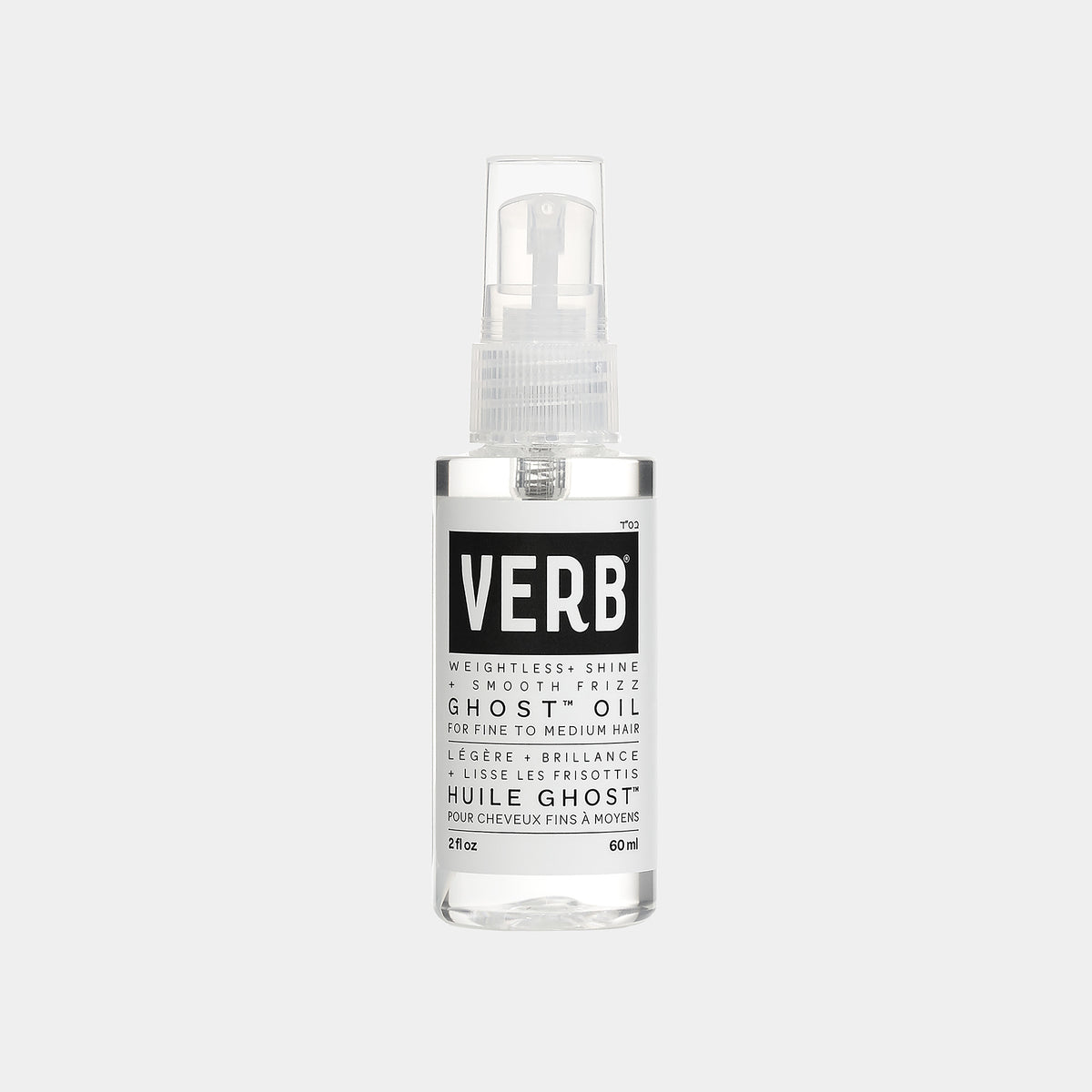
Now take the opposite situation. Your roots do not need anything, but the final few inches feel dry or frizzy. You add oil to smooth them and the ends suddenly separate into greasy-looking strands.
That does not automatically mean fine hair should never use oil. The issue may be the formula, the amount, or simply where you are applying it.
A more controlled approach is to start with a very small amount on the driest part of the hair instead of spreading oil from scalp to tip. Matrix recommends this kind of separation for fine hair with oily roots and dry ends, while Allure’s guidance also favors lighter conditioning approaches for fine hair. [2] [3]
Use this guide if your ends still need moisture but ordinary oils quickly make fine hair look stringy or greasy. It focuses specifically on lighter options for fine, low-porosity hair rather than treating every hair oil as interchangeable.
Compare lightweight hair oilsBefore Adding Another Product, Check These Four Things
- Are you adding more product when volume drops? If residue is already contributing to flatness, another layer may make the hair heavier rather than more supported.
- Are you treating roots and ends the same way? Roots may need lift while the ends need moisture. One product does not automatically need to cover both.
- Are you starting with the full suggested amount? Brand instructions are general. Fine hair may need less, so starting small gives you more control.
- Are you stacking products for every small problem? A powder, cream, leave-in, oil, and finishing spray may each sound useful. Together, they can become the problem.
Fine-hair community discussions show the same tension: people want more volume, smoother ends, or better hold, but some routines leave the hair flat, greasy, or dirty-feeling. Those reports are anecdotal rather than universal evidence, but they reinforce why adding more product is not always the best first move. [6] [7] [8]
So What Should You Try First?
Start with one problem, not your whole routine.
If your roots are flat, test a root-only solution. If freshly washed hair is too fluffy to control, look at texture rather than automatically adding more volume. If only the ends are dry, keep moisture on the ends.
And if almost everything makes your hair feel coated, simplify before buying something else. Reduce the number of layers, use less product, and watch where you are applying it.
The useful goal is not “use nothing on fine hair.”
It is to use the least product needed, in the part of the hair that actually needs it, for the problem you are actually trying to solve.
Sources & references
- Hair.com by L’Oréal — Why Fine, Flat Hair Is Flat & How to Get More Volume Open source ↗
- Matrix — Routine for Fine Hair With Oily Roots and Dry Ends Open source ↗
- Allure — Leave-in Conditioners for Fine Hair That Won’t Strip Volume Open source ↗
- Harmonize Beauty — Root Texturizing Powder official product information and application guidance Open source ↗
- California Born — Days of Dirt official product page, ingredients and usage guidance Open source ↗
- Reddit / r/finehair — Community discussion on getting volume without dirty-feeling or heavy hair Open source ↗
- Reddit / r/finehair — Community discussion covering fine hair, flatness, greasiness and dry ends Open source ↗
- Reddit / r/finehair — Community discussion on product buildup in fine hair Open source ↗
- Verb — Ghost Oil official product page Open source ↗
 ✓
✓