
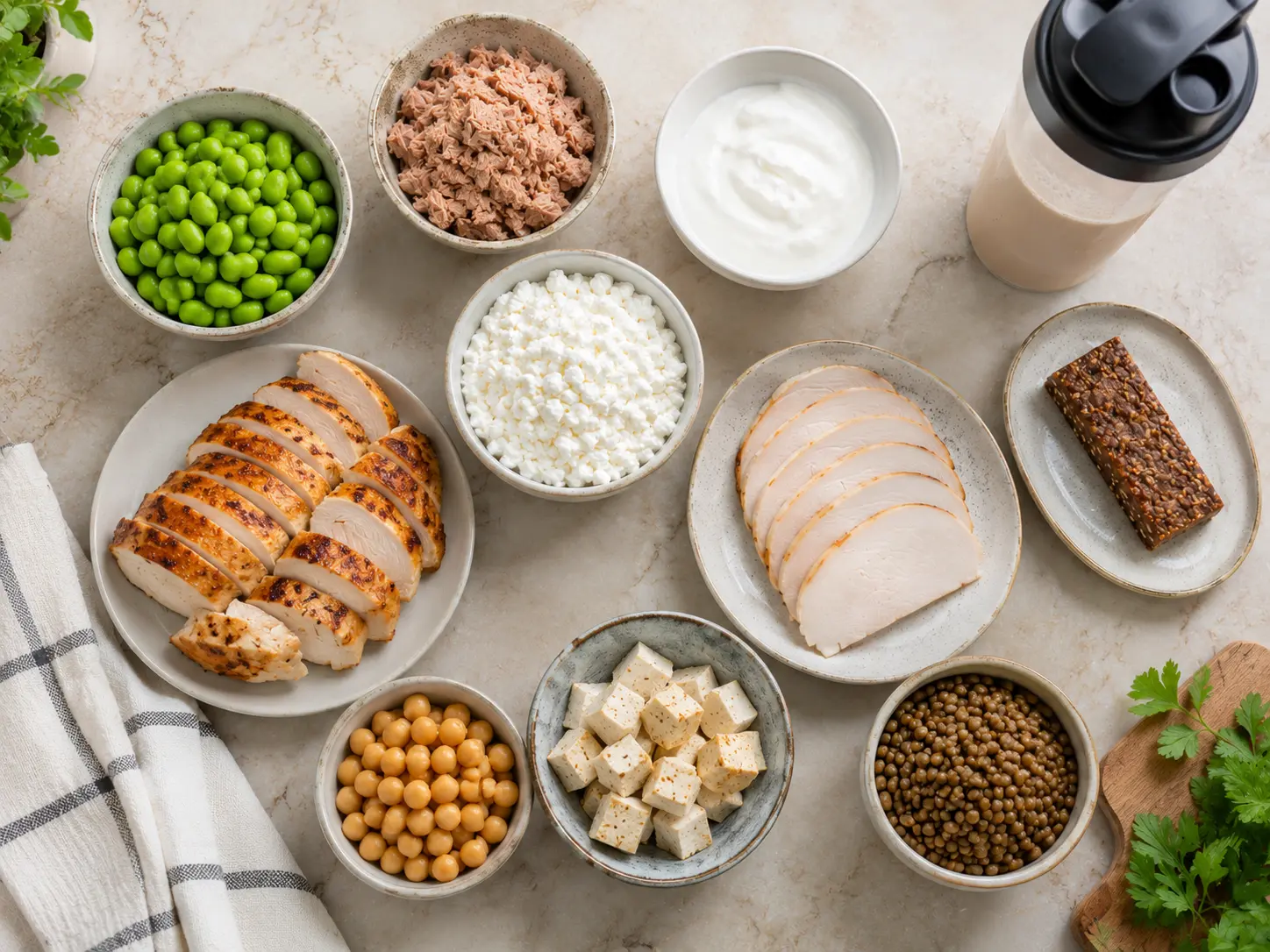

Alternatives to protein bars and shakes include chicken, tuna, Greek yogurt, cottage cheese, eggs, tofu and legumes. These familiar foods can provide meaningful amounts of protein while offering different options for storage, preparation and portability.
These foods are not interchangeable. They differ in protein density, refrigeration requirements, allergens, preparation time, portability and cost. The most suitable option therefore depends on where the food will be eaten and how it will be stored.
- Roasted turkey breast and water-packed tuna provide the most protein per 100 calories among the foods compared.
- Roasted chicken breast and plain nonfat Greek yogurt follow closely.
- Firm tofu provides the highest protein density among the four plant-based foods included.
- Eggs, lentils and chickpeas remain practical foods, but they provide less protein per calorie than the leading options in this comparison.
- Refrigeration and package storage instructions should be checked before choosing a snack for work, travel or a gym bag.
How Was This Comparison Calculated?
The foods were compared using protein and calorie values per 100 grams, followed by the same protein-density calculation for every option.
Nutrition values were based on reference food descriptions available through USDA FoodData Central, the USDA’s official food-composition database. Values have been rounded to one decimal place where appropriate.
Comparing the same 100-gram weight makes the foods easier to evaluate on a consistent basis. It does not mean that 100 grams is the recommended or usual serving for every food.
What Does This Method Measure?
The comparison measures:
- Grams of protein per 100 grams of food
- Calories per 100 grams of food
- Calculated grams of protein per 100 calories
- Normal refrigeration or storage requirements
- Basic preparation and portability considerations
What Does This Method Not Measure?
This table is not a ranking of:
- Overall healthfulness
- Taste or texture
- Food quality
- Sustainability
- Suitability for a medical condition
- Individual protein requirements
Those questions require more information than protein and calorie values alone.
Which Alternatives Provide the Most Protein per Calorie?
Roasted turkey breast and water-packed tuna each provide approximately 22 grams of protein per 100 calories in this comparison.
| Rank | USDA reference food | Protein per 100g | Calories per 100g | Protein per 100 calories | Normal storage |
|---|---|---|---|---|---|
| 1 | Turkey breast, meat only, roasted | 29.9g | 135 | 22.1g | Refrigerated after cooking |
| 2 | Light tuna, canned in water, drained | 25.5g | 116 | 22.0g | Follow the package; shelf-stable unopened products require refrigeration after opening |
| 3 | Chicken breast, meat only, cooked and roasted | 31.0g | 165 | 18.8g | Refrigerated |
| 4 | Greek yogurt, plain and nonfat | 10.3g | 59 | 17.5g | Refrigerated |
| 5 | Cottage cheese, low-fat, 2% milkfat | 10.5g | 81 | 13.0g | Refrigerated |
| 6 | Tofu, firm and prepared with calcium | 17.3g | 144 | 12.0g | Refrigerated |
| 7 | Edamame, cooked | 11.9g | 121 | 9.8g | Refrigerated after cooking |
| 8 | Egg, whole and hard-boiled | 12.6g | 155 | 8.1g | Refrigerated |
| 9 | Lentils, cooked without salt | 9.0g | 116 | 7.8g | Refrigerated after cooking |
| 10 | Chickpeas, cooked without salt | 8.9g | 164 | 5.4g | Refrigerated after cooking |
What Do These Protein-Density Results Mean?
A food containing more protein by weight does not necessarily provide more protein per calorie.
Why Do Turkey and Tuna Rank Above Chicken?
Chicken breast contains more protein per 100 grams than the turkey and tuna entries used here. However, it also contains more calories per 100 grams. Its calculated protein-per-calorie result is therefore lower.
- Turkey breast: approximately 22.1g protein per 100 calories
- Water-packed tuna: approximately 22.0g protein per 100 calories
- Chicken breast: approximately 18.8g protein per 100 calories
“Protein per serving,” “protein per 100 grams” and “protein per 100 calories” answer different questions. A fair comparison should state which measurement is being used.
Which Dairy Option Has the Highest Protein Density?
Plain nonfat Greek yogurt provides approximately 17.5 grams of protein per 100 calories, compared with approximately 13 grams for low-fat cottage cheese.
These figures should not be applied automatically to every yogurt or cottage cheese product. Added sugar, fruit, cream, flavorings and different milk-fat levels can change both calories and protein.
Which Plant-Based Option Ranks Highest?
Firm calcium-set tofu provides the highest protein density among the four plant-based foods included:
- Firm tofu: approximately 12.0g per 100 calories
- Cooked edamame: approximately 9.8g
- Cooked lentils: approximately 7.8g
- Cooked chickpeas: approximately 5.4g
This does not prove that tofu is the best plant-based snack in every situation. Refrigeration, preparation, allergies, price and personal preference still matter.
Are Eggs a Poor Choice Because They Rank Lower?
No. The table measures protein density, not the total value or suitability of a food.
Eggs may still be selected because they are familiar, easy to portion, widely available and practical for advance meal preparation. Their lower position simply shows that they provide less protein per calorie than several other foods in this specific comparison.
Which Alternatives Work Best Without Refrigeration?
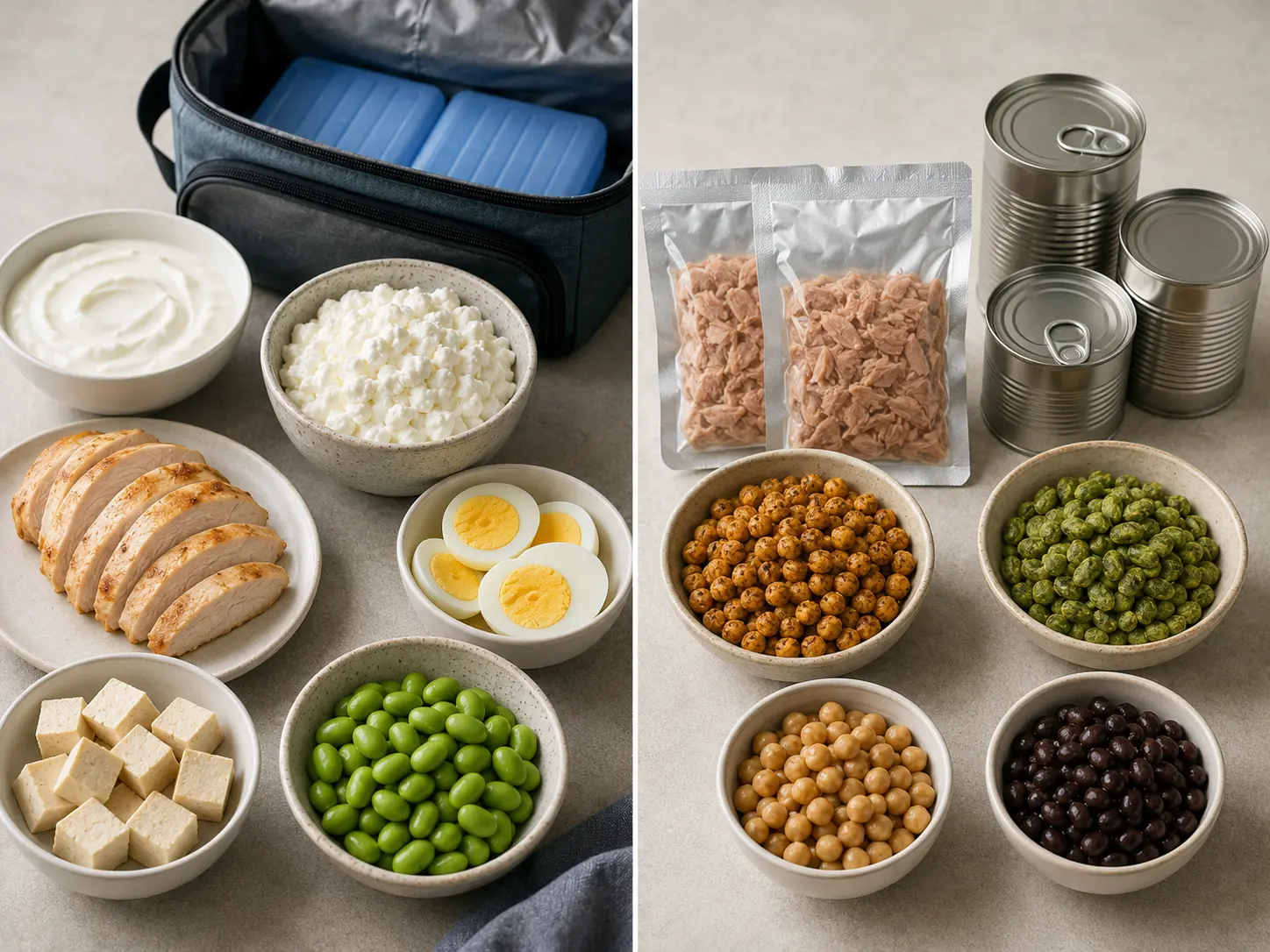
Products specifically labeled shelf-stable are the most practical choice when dependable refrigeration is unavailable.
An unopened tuna can or pouch may be stored at room temperature when the manufacturer identifies it as shelf-stable. After opening, unused food normally needs refrigeration.
Other potentially shelf-stable products include commercially packaged:
- Roasted chickpeas
- Dry-roasted edamame
- Meat or poultry pouches
- Jerky or meat sticks
- Canned lentils or chickpeas
Nutrition values from cooked chickpeas or cooked edamame also should not be applied to dry-roasted products. Removing water changes the nutrient concentration per 100 grams, while oils, sauces and seasonings may alter calories, sodium and allergens.
Which Refrigerated Alternatives Are Most Practical?
Greek yogurt, cottage cheese, cooked poultry, eggs, tofu and edamame are practical when a refrigerator or properly packed insulated container is available.
What Works in an Office Refrigerator?
Options requiring little preparation include:
- Plain Greek yogurt
- Cottage cheese
- Hard-boiled eggs
- Previously cooked chicken or turkey
- Cooked edamame
- Firm tofu prepared in advance
Before taking a food to work, consider whether it requires utensils, produces a strong smell, may leak or needs to be reheated. Tuna and eggs may not suit every shared workplace.
What Works in a Gym Bag?
An ordinary gym bag does not maintain a safe cold temperature for perishable food.
USDA guidance identifies temperatures between 40°F and 140°F as the food-safety danger zone. Perishable food should generally not remain at room temperature for more than two hours, or more than one hour when the temperature is above 90°F. Review the USDA danger-zone guidance.
USDA bag-lunch guidance recommends using an insulated bag with at least two cold sources for perishable food, such as frozen gel packs or a gel pack combined with a frozen bottle of water. See the USDA packed-lunch recommendations.
How Should You Compare the Real Cost?
Compare the price paid with the total protein in the usable package rather than comparing package prices alone.
How Does the Calculation Work?
Suppose a container:
- Costs $5
- Contains four servings
- Provides 15g of protein per serving
The package contains:
Its calculated cost per 20 grams of protein is:
This formula can be applied to yogurt, eggs, tofu, chicken, tuna, legumes or packaged snacks.
What Other Costs Should Be Included?
Depending on the product, consider:
- Shipping charges
- Subscription requirements
- Food waste
- Bones, liquid or other unusable portions
- Cooking ingredients
- Cooking energy
- Preparation and cleanup time
- Insulated storage and frozen packs
- Whether the package can be finished before its use-by date
A fixed price ranking is not included because grocery prices change by retailer, location, package size, date and promotion. A cost comparison should record the retailer, package size, collection date and actual checkout price.
Which Allergens Should You Check?
Milk, egg, fish and soy are the main U.S. major allergens directly associated with several foods in this comparison, while prepared flavors may introduce additional allergens.
| Food | Relevant major allergen | What to verify |
|---|---|---|
| Greek yogurt | Milk | Flavor ingredients and cross-contact statements |
| Cottage cheese | Milk | Milk ingredients and added flavorings |
| Hard-boiled eggs | Egg | Prepared seasoning or sauce ingredients |
| Tuna | Fish | Fish species, sauces and seasoning ingredients |
| Tofu | Soy | Marinades and prepared sauce ingredients |
| Edamame | Soy | Seasonings and cross-contact statements |
| Plain chicken or turkey | No inherent FDA major allergen | Prepared versions may include wheat, milk, soy, sesame or other allergens |
| Lentils or chickpeas | Not among the nine U.S. major allergens | Individual allergies remain possible; check prepared seasonings |
The FDA identifies nine major food allergens in the United States: milk, eggs, fish, crustacean shellfish, tree nuts, peanuts, wheat, soybeans and sesame. Review the current FDA allergen information.
Check each package and flavor separately. An allergen-free statement for one flavor should not be applied to every product sold by the same company.
How Can You Choose an Option Without Wasting Money?
Choose the correct storage category first, then compare nutrition, price, preparation and taste within that category.
-
Identify where the food will be eaten.
Decide whether the snack is mainly for home, an office, a gym, driving, hiking, air travel or emergency desk storage. -
Confirm the available cold storage.
Check whether a refrigerator, insulated bag and adequate frozen cold sources will be available. -
Read the actual package.
Review the serving size, protein, calories, ingredients, allergens, sodium, storage instructions and servings per package. -
Calculate protein density.
Divide protein grams by calories and multiply by 100. -
Calculate cost per 20 grams of protein.
Use the actual package price and the total protein contained in the usable package. -
Start with a small quantity.
Do not buy a large multipack until you know that you enjoy the food, can store it safely and can finish it before it expires.
What Is a Practical Three-Part Snack System?
One product does not need to solve every storage and portability problem. Keep separate options for different situations:
| Category | Examples | Main advantage | Main limitation |
|---|---|---|---|
| Home-prepared | Eggs, chicken, turkey, tofu, lentils or chickpeas | More control over portions and ingredients | Requires preparation and refrigeration |
| Refrigerated convenience | Greek yogurt, cottage cheese or prepared poultry | Less preparation | Requires dependable cold storage |
| Shelf-stable backup | Manufacturer-labeled tuna pouches, roasted chickpeas or dry-roasted edamame | Useful for travel and desk storage | Package-specific nutrition and storage must be checked |
What Is the Best Alternative to a Protein Bar or Shake?
Choose according to storage and preparation first, then use protein density, allergens and cost calculations to compare the suitable options.
Based on the ten foods compared:
- Turkey and water-packed tuna provide the most protein per calorie.
- Chicken breast follows closely and works well for refrigerated meal preparation.
- Plain nonfat Greek yogurt provides the highest protein density among the two dairy foods compared.
- Firm tofu provides the highest protein density among the four plant-based foods compared.
- Eggs are easy to portion but less protein-dense than several alternatives in the table.
- Lentils and chickpeas provide less protein per calorie than poultry, tuna, Greek yogurt or tofu, but can still contribute protein to a balanced snack or meal.
These results are not a universal health ranking. They are a reproducible comparison of protein and calorie values for ten specifically defined USDA reference foods.
FAQS
The main questions concern health claims, protein density, plant-based choices, refrigeration, shelf stability and whether a snack can replace a meal.
Are Food-Based Snacks Always Healthier Than Protein Bars or Shakes?
No. A food-based snack is not automatically healthier. Compare the actual serving size, protein, calories, sodium, added sugar, ingredients, allergens and storage requirements.
Which Food Provides the Most Protein per Calorie?
Roasted turkey breast ranks first in this comparison at approximately 22.1 grams of protein per 100 calories. Water-packed tuna follows closely at approximately 22 grams.
The result may change when a different cut, preparation method or branded product is used.
Which Plant-Based Option Provides the Most Protein per Calorie?
Firm calcium-set tofu ranks highest among the plant-based foods included, providing approximately 12 grams of protein per 100 calories.
Can Hard-Boiled Eggs or Chicken Be Carried in a Gym Bag?
Only when they are kept safely cold. Use an insulated bag with adequate frozen cold sources. Do not assume that an ordinary gym bag can maintain a temperature of 40°F or below.
Are Tuna and Chickpea Pouches Always Shelf-Stable?
No. Treat a product as shelf-stable only when the manufacturer states this on the package. Storage requirements can change immediately after opening.
Can a High-Protein Snack Replace a Complete Meal?
Not necessarily. A food may provide protein without supplying enough total food, calories, carbohydrates, fiber, fruit, vegetables or other meal components.
Depending on the portion and individual requirements, pair the protein food with other suitable foods.
Which Sources Support This Comparison?
Nutrition data comes from USDA FoodData Central, food-safety guidance comes from USDA FSIS and U.S. allergen information comes from the FDA.
- USDA FoodData Central official U.S. food-composition database used for the reference nutrition values.
- USDA FoodData Central downloadable datasets source files and database releases.
- USDA FSIS: Danger Zone 40°F to 140°F temperature and time guidance for perishable food.
- USDA FSIS: Keeping Bag Lunches Safe guidance for insulated containers and cold sources.
- FDA: Food Allergies current list of the nine major U.S. food allergens and labeling information.
 ✓
✓