
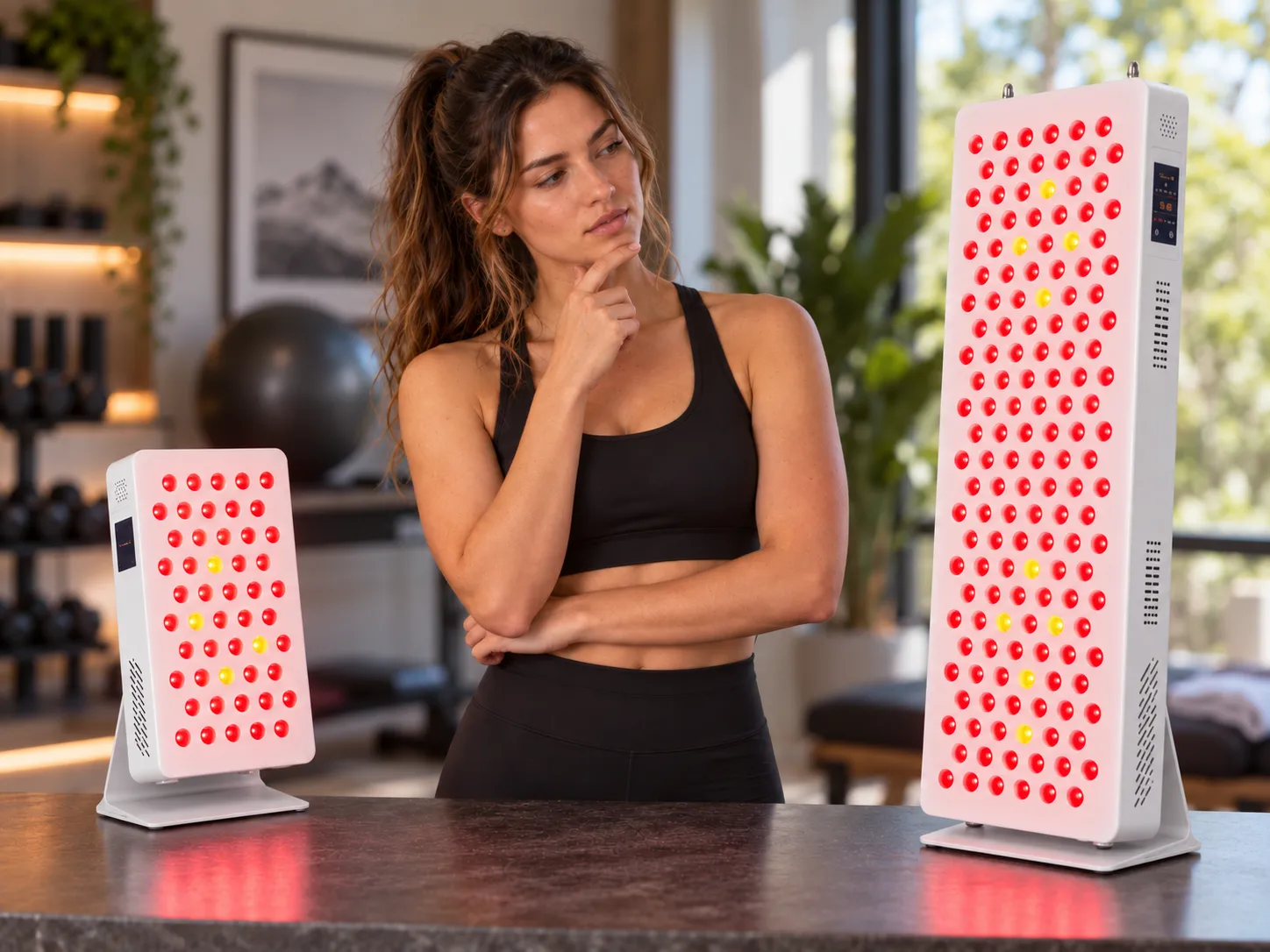

The MitoPRO 300X costs $449. The MitoPRO 750X costs $749. [1]
At first, that looks like a simple $300 decision: save the money and choose the smaller panel, or spend more for the larger one.
But once you picture how you actually plan to use it, the question changes. If your focus is mainly your face or neck, the 300X may already cover what you need. If your plan also includes your lower back, shoulders or several different areas, panel size starts to matter in a more practical way.
So this comparison is less about deciding which model is “better” and more about whether the extra coverage of the 750X solves a problem you are likely to have.
The 300X is easier to justify if your planned use is targeted face, neck, one joint or another relatively small area.
The 750X becomes easier to justify when broader upper- or lower-body coverage is already part of your plan and reducing repositioning matters enough to you to pay another $300.
Start with what you actually get for $449 and $749
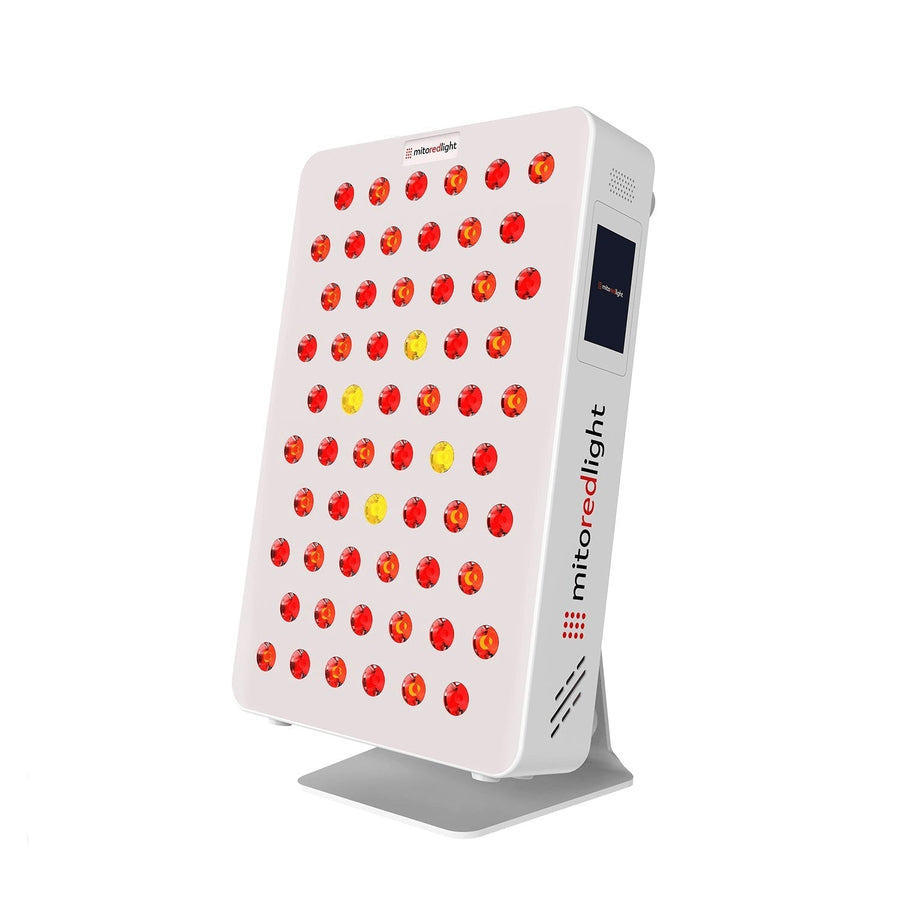
MitoPRO 300X
Mito positions this model for targeted areas and face-and-neck use. [1]
- Panel size 9.5 × 14.5 in
- LED lenses 60
- LED chips 120
- Weight 7 lb
- Power 125W
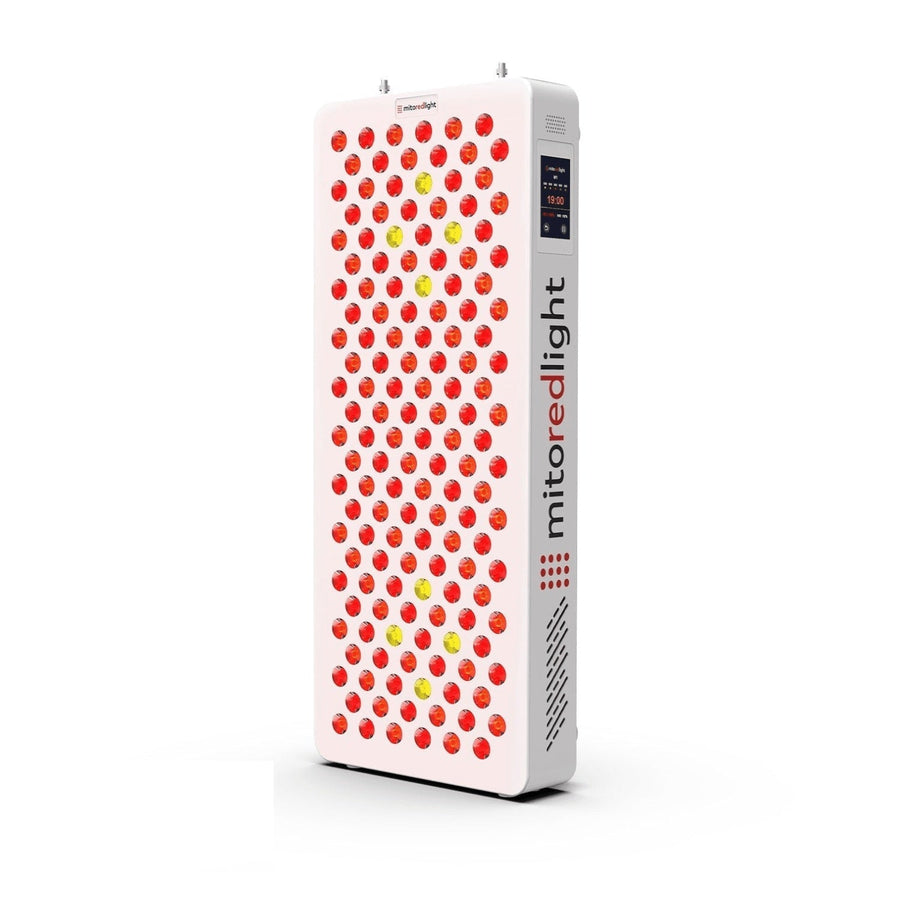
MitoPRO 750X
Mito positions this model for broader upper- or lower-body coverage. [1]
- Panel size 10 × 23 in
- LED lenses 150
- LED chips 300
- Weight 15 lb
- Power 225W
So what are you really paying $300 more for?
The most obvious difference is physical coverage.
The 300X measures 9.5 × 14.5 inches. The 750X is 10 × 23 inches. It also increases from 60 LED lenses to 150. [1]
Those numbers matter because the larger panel can cover a broader area from the same position. That is the part of the upgrade that is easiest to understand without turning this into a simple “bigger is better” comparison.
If your main goal is face and neck, does the size upgrade add enough value?
If face and neck are your main use cases, the published size difference alone does not make a strong case for paying $300 more.
Mito already positions the 300X for targeted areas and face-and-neck use. It also weighs 7 lb compared with 15 lb for the 750X. [1]
In that situation, the 300X becomes easier to justify: it costs less, takes up less space and is designed around smaller treatment areas.
The larger panel becomes more relevant when your planned treatment area becomes larger too.
The decision changes when your lower back is involved
A smaller panel can still be positioned toward the lower back. The issue is not whether it can point at that area; the issue is how much of the area it covers from one position.
With a 9.5 × 14.5-inch panel, a buyer who wants broader lower-back coverage may need to work in smaller sections. The 750X extends to 23 inches in height, which changes that practical setup. [1]
300X: lower upfront cost and a smaller device, with less area covered from one position.
750X: higher upfront cost and a larger device, with broader upper- or lower-body coverage.
How much repositioning are you actually willing to do?
This may matter more than the spec sheet.
If you plan to use the panel on one small area at a time, moving a smaller panel may not be much of a drawback.
If you already expect to rotate between your face, lower back, shoulders and other larger areas, the inconvenience can become more noticeable because each position covers less.
Some Reddit discussions among red-light-therapy users raise the same practical concern: smaller panels can work for multiple areas, but treating several areas may require more repositioning and more separate setups. [3]
Community experiences are anecdotal and should not be treated as clinical evidence.
Are you paying for more power or mostly more coverage?
The official specifications do show differences in LED count, power and published irradiance measurements. [1] [2]
But a higher number in one specification does not automatically make one panel the better purchase for every buyer.
For this comparison, the differences that are easier to apply to a real buying decision are panel dimensions, intended treatment area, weight and the amount of repositioning your planned routine may require.
That is why the more useful question is not “Which one has the bigger numbers?” It is “Which panel size matches what I actually plan to treat?”
The 300X is easier to justify if…
Your planned use is mainly your face, neck, one joint or another relatively small target area.
You prefer the $449 price and do not expect broader body coverage to be an important part of your routine.
The 750X is easier to justify if…
Your lower back, torso or several larger areas are already part of your plan.
Paying another $300 feels reasonable because broader coverage may reduce how often you need to move the panel.
What if your lower back is the main reason you are shopping?
Then panel size may not be the only decision worth considering.
Mito also sells the wearable MitoQUAD belt for targeted body use. If your lower back is the main reason you are shopping, rather than wanting one panel for several different areas, comparing that format first may make more sense.
Read our MitoQUAD Red Light Belt review
Final decision: when does the 750X earn the extra $300?
The 300X is easier to justify if your use is genuinely targeted and its smaller treatment area already covers what you plan to treat.
The 750X becomes easier to justify when broader upper- or lower-body coverage is already part of your plan and reducing repositioning is worth the extra $300 to you.
The upgrade only earns its price if the additional coverage solves a problem you actually have.
Compare the two before you decide
MitoPRO 300X
Designed around targeted areas and face-and-neck use. [1]
Shop MitoPRO 300X Get 5% off when you shop Mito Red Light through this link.
MitoPRO 750X
Designed around broader upper- or lower-body coverage. [1]
Shop MitoPRO 750X Get 5% off when you shop Mito Red Light through this link.Want to compare the rest of the lineup? Read our complete Mito Red Light review .
Sources & references
- Mito Red Light MitoPRO X Series product page, pricing, dimensions, specifications and product positioning Open source ↗
- Mito Red Light Independent Red Light Therapy Panel Test Data Open source ↗
- Reddit r/redlighttherapy MitoPRO panel-size discussion involving the 300X and 750X Open source ↗
 ✓
✓