
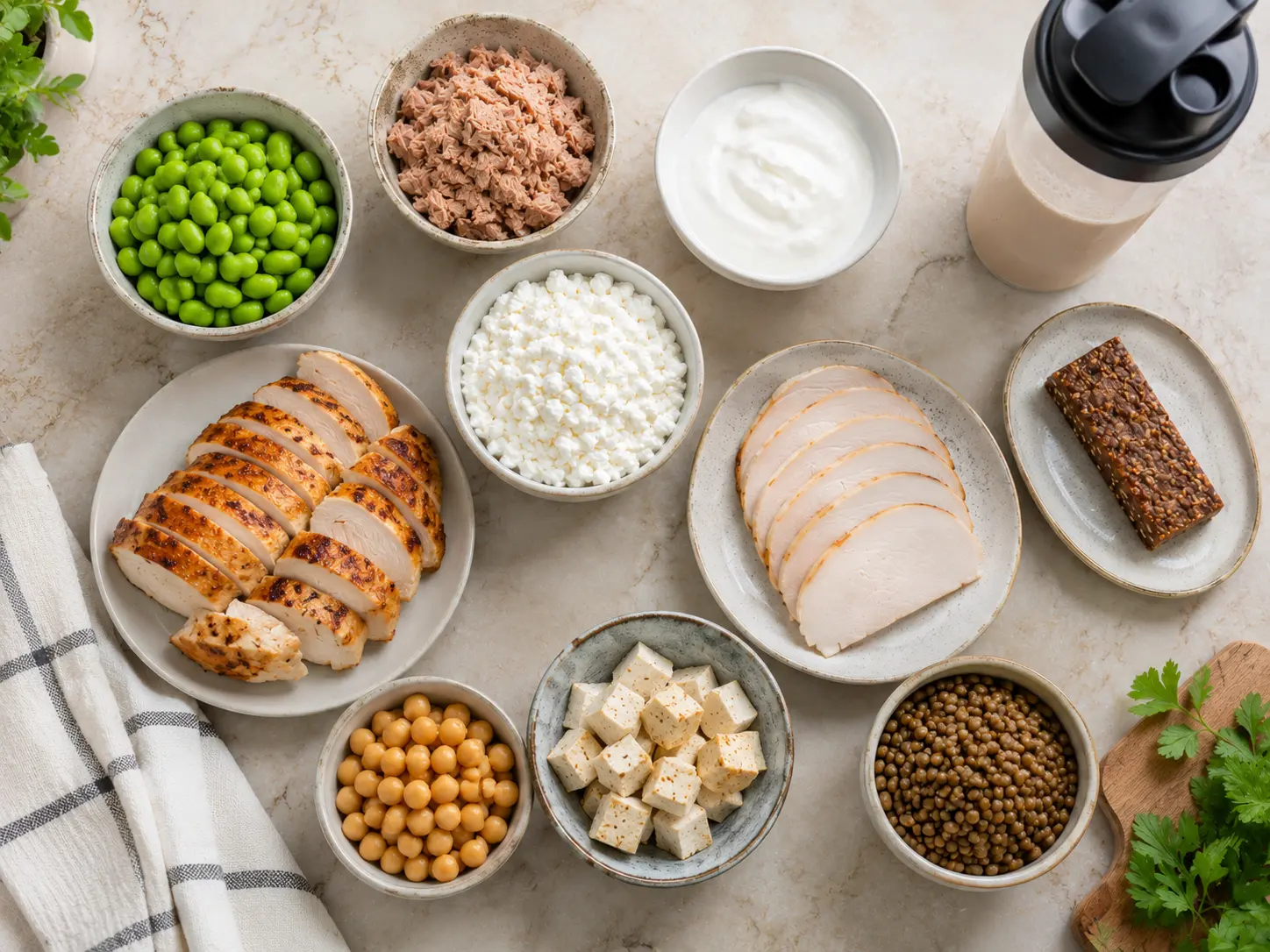

If the reason you keep a protein bar or shake around is that it solves a protein need without turning into a full meal-prep project, replacing it with “real food” only helps if the new option is still practical.
That changes the question. Instead of asking which foods contain the most protein, it is more useful to ask which foods can fit the same moment: little time, limited storage, and a need for something you can actually eat without much setup.
Quick Answer
Start with the constraint that makes a bar or shake useful to you. If you have a refrigerator, plain nonfat Greek yogurt and low-fat cottage cheese are among the lowest-prep options here. If you need an unopened shelf-stable backup, a tuna can or pouch may fit when the manufacturer specifically labels it for room-temperature storage. If you can prepare food ahead, turkey, chicken and eggs give you more options. Among the plant-based foods compared, firm tofu has the highest protein density. [1]
What Are You Actually Replacing: Protein or Convenience?
A shake is not useful only because it contains protein. It is also quick, portioned and predictable. That means a food-based alternative can look strong on a nutrition table and still be a poor replacement if it needs cooking, utensils or cold storage you do not have.
If you are still considering a packaged bar rather than food alternatives, our TRUBAR review compares Original 12g bars and the higher-protein PRO line on flavor, ingredients and price.
If you prefer a protein drink but want to avoid sucralose, our clear protein without sucralose comparison checks sweeteners and practical trade-offs across four options.
This comparison therefore uses two layers: USDA nutrition data for protein density, then practical limits such as preparation and refrigeration. The nutrition figures are standardized per 100 grams and per 100 calories so the foods can be compared on the same basis. [1]
Protein per 100g29.9g
Protein per 100 calories22.1g
High protein density, but usually needs advance cooking and refrigeration
Protein per 100g25.5g
Protein per 100 calories22.0g
Very little prep; only treat it as shelf-stable when the package says so
Protein per 100g31.0g
Protein per 100 calories18.8g
High protein by weight, but normally needs preparation and refrigeration
Protein per 100g10.3g
Protein per 100 calories17.5g
Ready to eat, but requires refrigeration
Protein per 100g10.5g
Protein per 100 calories13.0g
Ready to eat, but requires refrigeration
Protein per 100g17.3g
Protein per 100 calories12.0g
Strongest plant-based protein density here, but usually needs preparation
Protein per 100g11.9g
Protein per 100 calories9.8g
Easy once prepared, but refrigeration is needed after cooking
Protein per 100g12.6g
Protein per 100 calories8.1g
Portable after prep, but needs refrigeration
Protein per 100g9.0g
Protein per 100 calories7.8g
Useful as part of a meal or snack, but not a true no-prep replacement
Protein per 100g8.9g
Protein per 100 calories5.4g
Easy to use once prepared, but less protein-dense than the other options listed
The calculation is: protein per 100 calories = protein per 100g ÷ calories per 100g × 100. It is a comparison tool, not a serving recommendation or an overall health ranking.
If You Have a Fridge, Which Options Are Actually Quick?
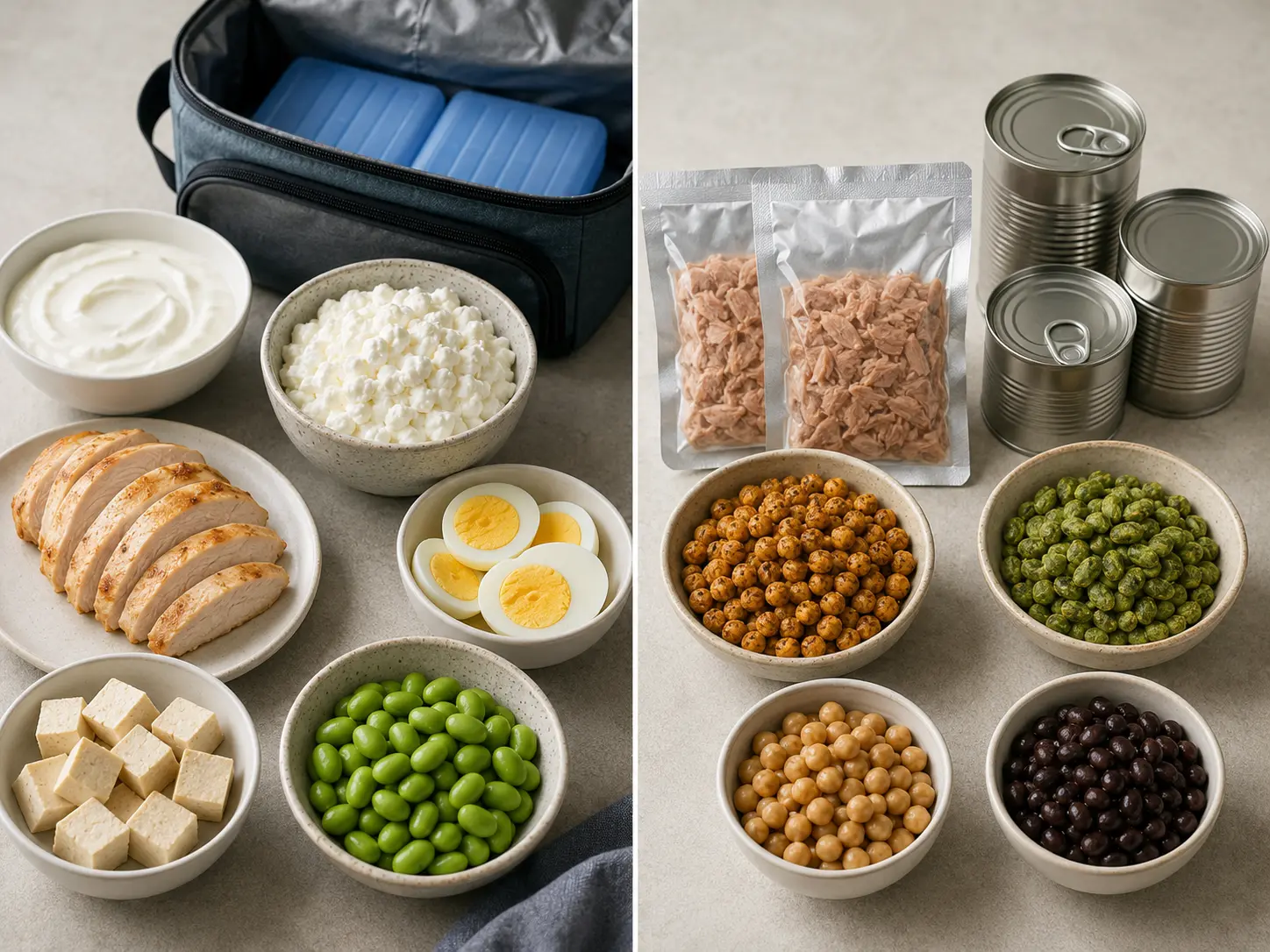
This is where the convenience question becomes clearer. A refrigerator removes one of the biggest limits, so ready-to-eat dairy and prepared foods become realistic alternatives.
Greek yogurt and cottage cheese require almost no preparation beyond opening the container. That makes them closer to the “grab it and eat it” role of a bar than chicken or tofu that still needs to be cooked or portioned first.
Eggs, turkey and chicken can also be convenient, but only after the preparation has already happened. If you cook them in advance, they can work well for a packed lunch. If nothing is prepared, they do not solve the same last-minute problem as a shake.
Tofu and edamame give you plant-based routes, but the same trade-off applies: their convenience depends on whether they are already cooked or prepared when you need them.
What Works When You Do Not Have Reliable Refrigeration?
Without dependable cold storage, the list gets shorter. The safest route is to use foods that the manufacturer specifically labels shelf-stable before opening.
An unopened tuna can or pouch can fit this role when the package confirms room-temperature storage. Commercially packaged roasted chickpeas or dry-roasted edamame may also be useful, but their nutrition should be checked on the actual label rather than borrowed from the cooked-food values in the table above.
A sealed package is not automatically shelf-stable. USDA guidance also identifies 40°F to 140°F as the food-safety danger zone for perishable foods. For packed lunches containing perishables, USDA recommends an insulated bag with at least two cold sources. [2][3]
Which Options Give You More Protein for the Calories?
If calorie efficiency matters after you have narrowed the list to foods that fit your routine, turkey and water-packed tuna lead this comparison at about 22 grams of protein per 100 calories. Chicken follows at about 18.8 grams, then plain nonfat Greek yogurt at about 17.5 grams.
Among the plant-based foods here, firm tofu provides about 12 grams of protein per 100 calories, ahead of cooked edamame, lentils and chickpeas.
But this is where the trade-off matters. A food can be more protein-dense and still be less convenient for your situation. Turkey may beat cottage cheese on protein density, for example, but cottage cheese may be easier when you have a refrigerator and no time to cook.
When Does “Real Food” Stop Being Convenient?
If replacing a shake creates extra cooking, cleanup, refrigeration or planning that you will not realistically do, the higher-quality comparison is not “food versus shake.” It is whether the replacement fits the same use case.
A simple way to separate the options is:
- Need something ready now with a fridge: Greek yogurt or cottage cheese.
- Need something shelf-stable before opening: a manufacturer-labeled tuna can or pouch, or another packaged product whose storage instructions allow it.
- Can prepare food ahead: turkey, chicken, eggs, tofu or edamame.
- Want the highest protein density among these foods: turkey, tuna and chicken.
- Want a plant-based option with the highest protein density in this comparison: firm tofu.
Commercially prepared refrigerated chicken can reduce some of the cooking and portioning work, but that shifts the decision toward price, shipping and cold-storage requirements. If that is the route you are comparing, see our Impeccable Chicken buying guide. If texture, refunds, subscriptions or refrigerated-delivery concerns are part of your decision, the Impeccable Chicken complaints guide covers those risks separately.
A Simple Way to Choose
- Start with storage. Do you have a refrigerator, an insulated bag, or neither?
- Set your preparation limit. Do you need ready-to-eat food, or can you prepare something in advance?
- Then compare protein density. Use the table only among the foods that already fit those first two limits.
- Check the actual serving and label. The table uses standardized reference foods; branded products and normal serving sizes can differ.
- Check allergens. Milk, egg, fish and soy are relevant major allergens for several foods here, while prepared flavors can add others. [4]
- Compare real cost after you have a shortlist. Package size, waste, preparation and storage can matter more than the shelf price alone.
The point is not to find one universal winner. It is to avoid choosing a nutritionally impressive option that fails in the exact situation where you needed a bar or shake in the first place.
FAQs
What is the highest-protein food in this comparison?
Chicken breast contains the most protein per 100 grams at 31.0g. Roasted turkey provides the most protein per 100 calories at about 22.1g. [1]
What can replace a protein shake if I do not have a fridge?
Use foods the manufacturer specifically identifies as shelf-stable until opened. A tuna can or pouch can be one example. Do not assume that every sealed product can safely stay at room temperature.
Can one of these options replace a full meal?
Not automatically. A food can provide protein without providing enough total calories, carbohydrates, fiber or other meal components for your situation.
Sources & References
- USDA FoodData Central
Main database · Turkey · Tuna · Chicken · Greek yogurt · Cottage cheese · Tofu · Edamame · Egg · Lentils · Chickpeas - USDA FSIS — Danger Zone 40°F to 140°F
- USDA FSIS — Keeping Bag Lunches Safe
- FDA — Food Allergies
- USDA FoodData Central downloadable datasets
 ✓