


Sleep & Bedding Guide
If you wake up sweaty, flip your pillow all night, or feel trapped in heat, your mattress may be part of the problem. This guide explains the real difference between a cooling mattress and a regular mattress, how cooling mattress technology works, and what hot sleepers should check before buying.
Last Updated: May 13, 2026
Quick Answer
A cooling mattress is usually better for hot sleepers because it is designed to reduce heat retention, improve airflow, and regulate the sleep surface. A regular mattress can still work if it is breathable, but dense foam mattresses without cooling features may trap more body heat.
TL;DR
- Cooling mattresses use breathable covers, gel foam, airflow layers, coils, latex, or phase-change materials to reduce heat buildup.
- Regular mattresses are not always hot, but basic memory foam models may retain more warmth.
- Hybrid cooling mattresses are often strong for hot sleepers because coils improve airflow.
- Cooling features work best with breathable sheets, light bedding, and a cool bedroom.
- Night sweats can have medical causes, so frequent sweating should not be blamed only on the mattress.
- The best mattress for hot sleepers should balance cooling, support, firmness, and pressure relief.
Table of Contents
What Is a Cooling Mattress?
A cooling mattress is a mattress designed to help hot sleepers stay more comfortable by reducing heat retention and improving airflow. It may use breathable covers, gel memory foam, open-cell foam, latex, coils, airflow channels, or temperature regulating materials.
The goal is not to make the mattress feel icy all night. The real goal is to help body heat escape instead of getting trapped around your back, hips, shoulders, and bedding.
Cooling mattresses are especially useful for people who sleep hot, couples who share body heat, people living in warm climates, and sleepers who like foam comfort but dislike heat buildup.
For more buying guides, visit PromoLatte, explore the Lifestyle category, or browse the full Sleep & Bedding section.
Example
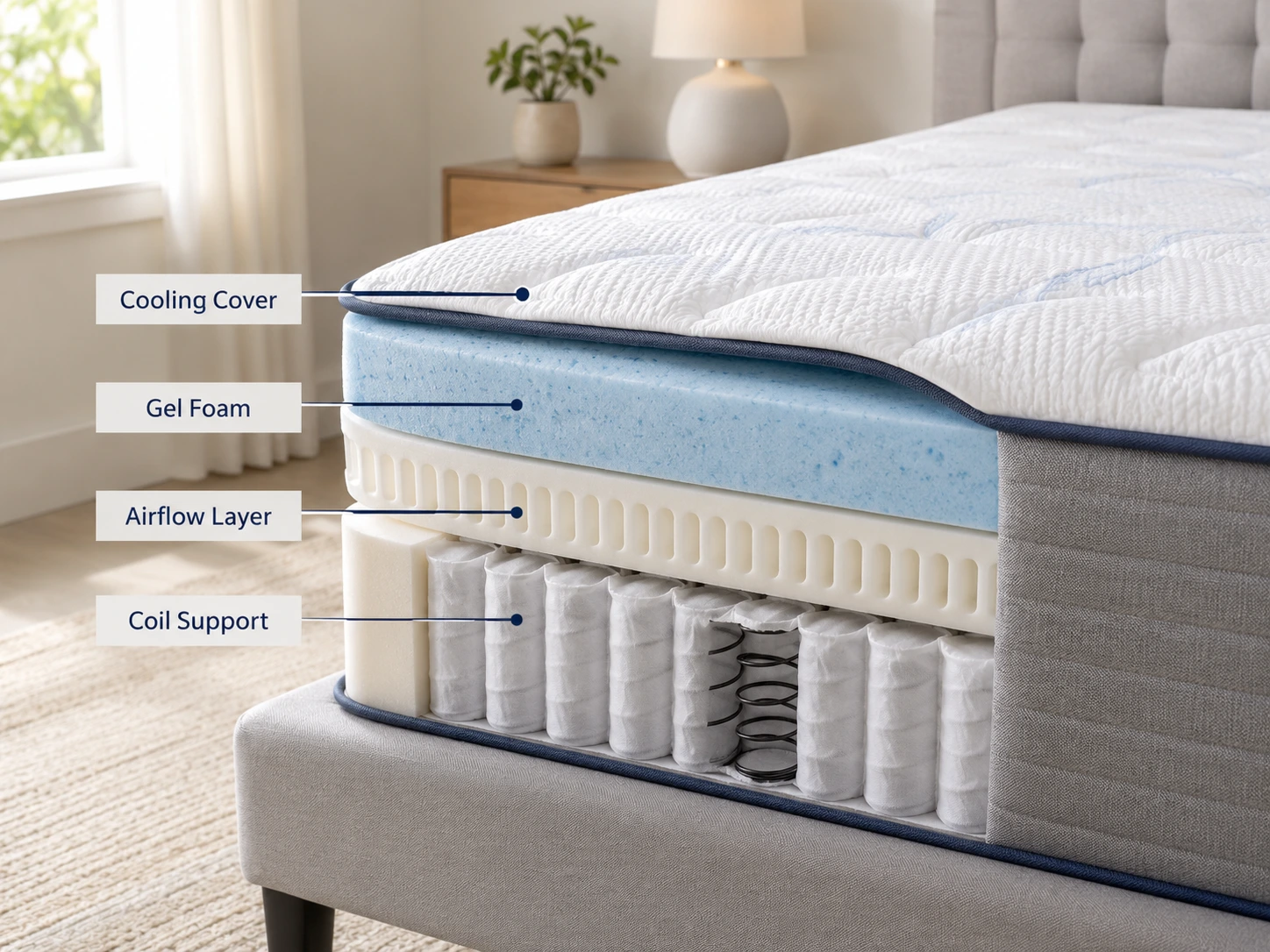
A hybrid cooling mattress may use a cool-touch cover, gel foam comfort layer, airflow foam, and pocketed coils that allow air to move through the support core.
Real-World Use
If you wake up hot on a traditional memory foam mattress, a cooling foam mattress or hybrid cooling mattress may help because it is designed to release heat more efficiently.
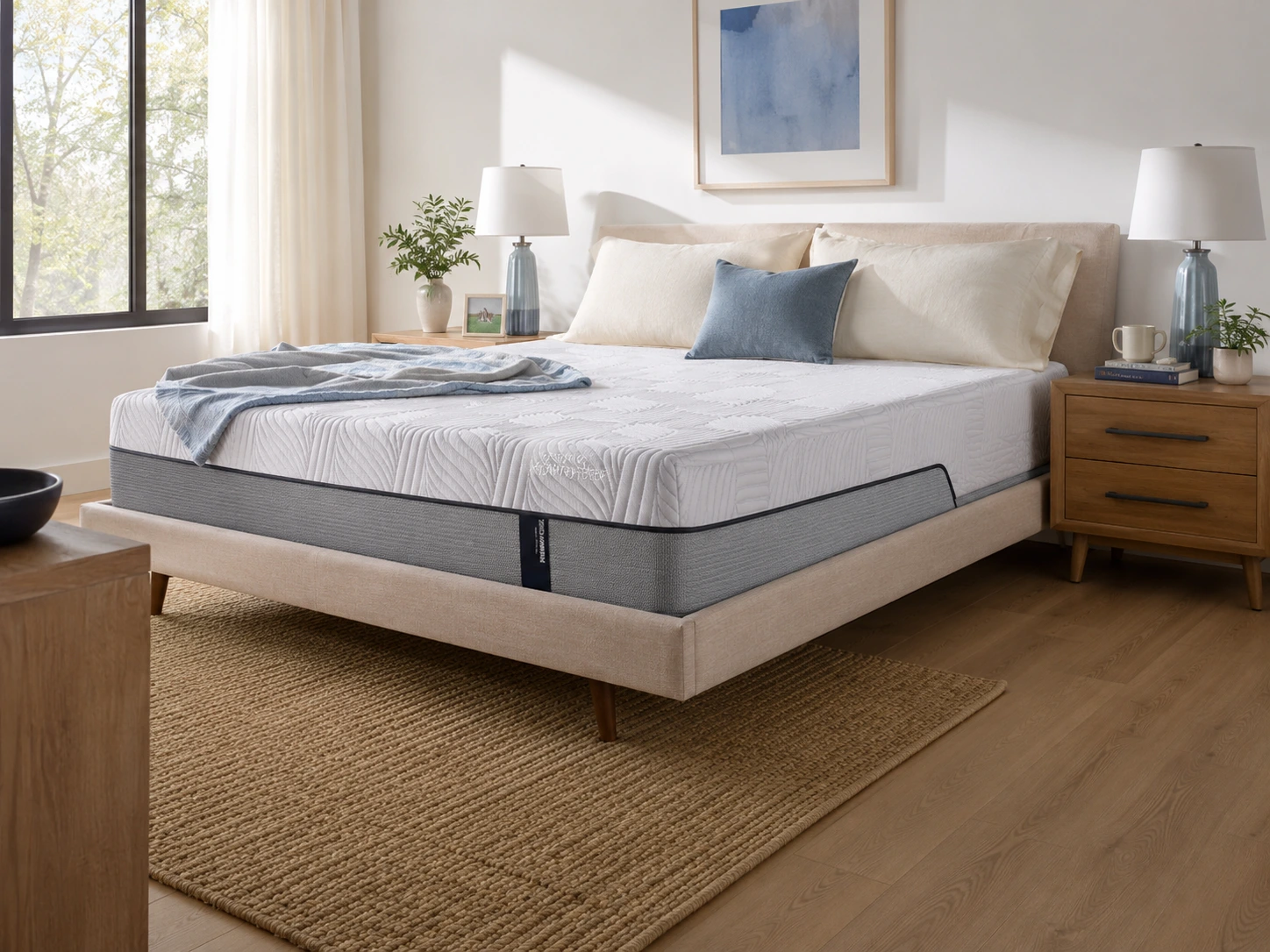
Cooling Mattress Bedroom Setup
What Is a Regular Mattress?
A regular mattress is any mattress that does not specifically focus on cooling technology. It may still be comfortable, supportive, and breathable, but cooling is not its main design priority.
Regular mattresses can include memory foam, innerspring, latex, or hybrid models. Some sleep temperature-neutral, while others can feel warm depending on foam density, cover material, airflow, room temperature, and bedding setup.
Example
A basic memory foam mattress may feel soft and pressure-relieving, but if the foam is dense and the cover is not breathable, it may hold heat close to the body.
Real-World Use
A regular mattress may be fine if you do not sleep hot, live in a cooler climate, use breathable sheets, or prefer a simple mattress without premium cooling features.
Cooling Mattress vs Regular Mattress: What Is the Main Difference?
The main difference between a cooling mattress and a regular mattress is heat management. A cooling mattress is built to reduce heat buildup. A regular mattress may focus more on basic comfort, support, or price without advanced temperature control.
Cooling mattress benefits usually include better airflow, less heat retention, a cooler surface feel, and improved comfort for people who sleep hot. Regular mattresses may still be supportive and affordable, but they may not be the best mattress for hot sleepers if they trap body heat.
If you are also comparing mattress firmness, support, and sleep positions, read this detailed guide on how to choose the right mattress before making your final decision.
Example
Two mattresses can both be medium-firm, but the cooling mattress may use breathable foam and coils, while the regular mattress may use dense foam layers that hold warmth.
Real-World Use
If you are choosing between two similar mattresses, hot sleepers should compare the cooling cover, foam type, coil airflow, breathability, and trial policy before choosing the cheaper option.
How Does Cooling Mattress Technology Work?
Cooling mattress technology works by helping heat move away from your body instead of trapping it in the sleep surface. Different mattresses use different materials, but most cooling features focus on airflow, heat dispersion, moisture control, or temperature regulation.
1. Cooling Cover
A cooling cover is the top fabric layer of the mattress. It may use breathable fibers, cool-touch yarns, or phase-change materials designed to absorb and release heat.
Example: A cool-touch cover may feel cooler when you first lie down compared with a standard polyester cover.
Real-world use: Cooling covers work better when you avoid thick, heat-trapping mattress protectors or heavy bedding on top.
2. Gel Memory Foam
Gel memory foam mattress layers are designed to reduce the heat retention often associated with traditional memory foam. Gel may help disperse heat, but performance depends on the full mattress design.
Example: A gel memory foam mattress may feel cooler than old-style dense memory foam, especially during the first part of the night.
Real-world use: Choose gel foam with breathable construction, not gel foam alone. Airflow and cover quality matter too.
3. Open-Cell or Airflow Foam
Open-cell foam is designed with a more breathable structure than dense closed foam. Some mattresses also use perforations or airflow channels to move air through the comfort layer.
Example: A cooling foam mattress may include small ventilation channels that help release heat from the top layers.
Real-world use: This is useful for people who like foam comfort but do not want the deep, warm hug of traditional memory foam.
4. Hybrid Coil System
A hybrid cooling mattress uses coils below the comfort layers. The coil system can improve airflow because there is open space inside the support core.
Example: A hot sleeper who feels stuck in all-foam beds may prefer a hybrid because it feels more breathable and easier to move on.
Real-world use: Hybrid mattresses are often strong choices for couples, hot sleepers, back sleepers, and combination sleepers.
Cooling Mattress Layer Breakdown
Best Mattress Type for Hot Sleepers
The best mattress for hot sleepers usually combines breathability, support, and pressure relief. A mattress that feels cool but does not support your spine is not a good long-term choice. A supportive mattress that traps heat may also disrupt sleep comfort.
Hybrid Cooling Mattress
A hybrid cooling mattress is often one of the best choices for hot sleepers because it combines comfort layers with coil airflow. The coils help reduce trapped heat while the top layers provide cushioning.
Example: A side sleeper may choose a medium hybrid cooling mattress with pressure-relieving foam and breathable coils.
Real-world use: Choose hybrid if you want cooling, bounce, edge support, and easier movement.
Latex Mattress
Latex is usually more responsive and breathable than many dense foams. It does not hug the body as deeply as memory foam, which can help hot sleepers feel less trapped.
Example: A sleeper who dislikes sinking into foam may prefer latex because it feels lifted and airy.
Real-world use: Choose latex if you want a breathable, buoyant, and durable mattress feel.
Cooling Foam Mattress
A cooling foam mattress may work well for hot sleepers who still want the contouring feel of foam. The key is choosing foam with cooling features, not basic dense foam.
Example: A couple may choose cooling foam because it reduces motion transfer while still offering better temperature control than traditional memory foam.
Real-world use: Look for open-cell foam, gel foam, breathable covers, and a sleep trial.
Is a Cooling Mattress Good for Night Sweats?
A cooling mattress can help if your night sweats are partly caused by overheating, warm bedding, heat-trapping foam, or a hot bedroom. It may not solve night sweats caused by medical conditions, medications, hormones, infections, or other health factors.
Cleveland Clinic explains that night sweats can have many possible causes. Practical cooling steps may include lightweight bedding, breathable sleepwear, fans, cooling pillows, and cooling mattress covers.
Example
If you sweat because your room is warm and your mattress traps heat, switching to a breathable hybrid cooling mattress may improve comfort.
Real-World Use
Before blaming the mattress only, check your room temperature, bedding, pajamas, mattress protector, caffeine, alcohol, medications, and health symptoms.
Cooling Mattress vs Memory Foam Mattress
A cooling mattress and a memory foam mattress are not always opposites. Some cooling mattresses use memory foam, but they modify it with gel, open-cell structure, airflow channels, or breathable covers to reduce heat retention.
Traditional memory foam is known for contouring and motion isolation, but it can feel warmer because it hugs the body closely. Cooling memory foam tries to keep the pressure relief while reducing the heat-trapping effect.
Example
A regular memory foam mattress may feel cozy at first but warm after a few hours. A cooling gel memory foam mattress may offer a similar contouring feel with better temperature comfort.
Real-World Use
Choose cooling foam if you want pressure relief and motion isolation. Choose hybrid cooling if you want more airflow, stronger edge support, and easier movement.
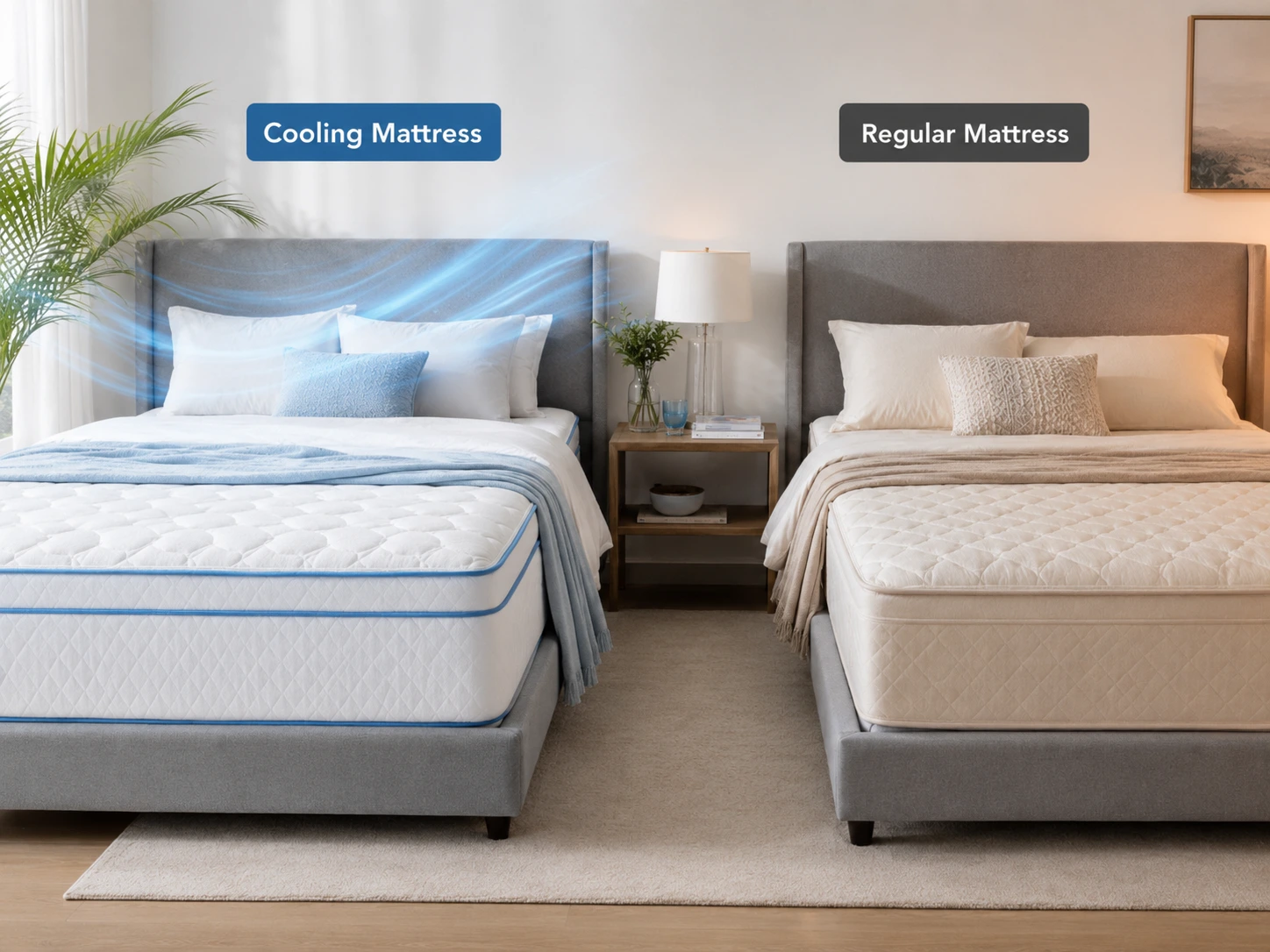
Cooling Mattress vs Regular Mattress Visual
Cooling Mattress Benefits for Better Sleep
Temperature comfort matters because overheating can make sleep feel restless. A cooling mattress may support better sleep quality by helping the bed feel more breathable and less heat-trapping.
Better Temperature Comfort
A cooling mattress may reduce the feeling of heat being trapped around your body.
Example: A hot sleeper who wakes at 3 a.m. feeling overheated may benefit from a more breathable mattress surface.
Real-world use: Pair the mattress with cotton, linen, bamboo, or other breathable sheets for better results.
Less Tossing and Turning
When your bed feels too hot, you may toss, turn, uncover, or wake up repeatedly. Better temperature regulation can support more comfortable rest.
Example: A couple may sleep better on a cooling mattress if both people generate heat and share a smaller sleep space.
Real-world use: Choose a breathable mattress and avoid heavy comforters if overheating is your main problem.
Improved Comfort for Foam Lovers
Many people love memory foam pressure relief but dislike heat retention. Cooling foam mattresses try to solve that issue by combining contouring with better breathability.
Example: A side sleeper may choose gel memory foam for hip comfort while still looking for airflow features.
Real-world use: Check real user reviews from hot sleepers, not only product claims.
Comparison Table: Cooling Mattress vs Regular Mattress
Buyer Decision Guide: How to Choose a Cooling Mattress
Use this checklist before buying a cooling mattress:
- Choose a hybrid cooling mattress if airflow and support are top priorities.
- Choose cooling foam if you want pressure relief and motion isolation.
- Choose latex if you want a breathable, responsive, and lifted feel.
- Look for breathable covers, open-cell foam, gel foam, coils, or phase-change materials.
- Avoid dense all-foam beds if you already know memory foam makes you hot.
- Check whether the mattress protector is breathable; some protectors trap heat.
- Use breathable sheets and lightweight bedding to support the cooling effect.
- Read hot-sleeper reviews, not only general customer reviews.
- Choose a mattress with a trial period so you can test it in your real bedroom.
- Do not ignore support, firmness, and pressure relief just to get cooling features.
You can also browse more related guides in the Pillows & Mattresses section.
Common Mistakes When Buying a Mattress for Hot Sleepers
1. Believing Every “Cooling” Claim
Some mattresses use cooling language without meaningful airflow or temperature-regulating materials. Look for specific features, not vague marketing.
2. Ignoring Bedding
A cooling mattress can feel warmer if you cover it with thick synthetic sheets, a heavy comforter, or a non-breathable waterproof protector.
3. Choosing Cooling Over Support
A mattress that sleeps cool but lacks support can still lead to poor sleep quality. Hot sleepers still need proper firmness, pressure relief, and spine alignment.
4. Buying Dense Memory Foam Without Airflow
Traditional dense memory foam can trap heat. If you like foam, choose gel memory foam, open-cell foam, or cooling foam with breathable construction.
5. Ignoring Medical Causes of Night Sweats
If night sweats are frequent, severe, or paired with fever, weight loss, pain, or other symptoms, do not treat the mattress as the only cause.
Expert Insight
The best way to compare a cooling mattress vs regular mattress is to ask one question: does this bed manage heat or simply feel comfortable in the showroom? Hot sleepers need airflow, breathable materials, and a sleep setup that allows heat to escape.
For most hot sleepers, a hybrid cooling mattress is a smart starting point because coils improve breathability while foam or latex comfort layers provide pressure relief. However, a cooling mattress is only one part of the sleep environment. Room temperature, bedding, pajamas, mattress protector, and airflow in the bedroom all matter.
Trusted Sources Behind This Guide
- Sleep Foundation — bedroom environment, temperature, light, noise, and comfort for sleep quality.
- Harvard Health Publishing — sleep hygiene and cool bedroom temperature guidance.
- National Library of Medicine — research review on sleep and thermoregulation.
- Cleveland Clinic — night sweats, possible causes, and cooling comfort steps.
FAQs About Cooling Mattress vs Regular Mattress
What is the difference between a cooling mattress and a regular mattress?
A cooling mattress is designed to reduce heat retention and improve airflow. A regular mattress may be comfortable and supportive, but it does not always include cooling covers, gel foam, airflow channels, or breathable coil systems.
Is a cooling mattress worth it for hot sleepers?
Yes, a cooling mattress can be worth it for hot sleepers if overheating regularly disrupts sleep. It is most useful when paired with breathable sheets, light bedding, and a cool bedroom environment.
Do cooling mattresses really work?
Cooling mattresses can work, but results depend on the materials and the full sleep setup. A breathable hybrid cooling mattress usually performs better than a mattress that only adds a thin cooling cover without airflow support.
What is the best mattress for hot sleepers?
The best mattress for hot sleepers is often a breathable hybrid, latex, or cooling foam mattress. Look for airflow, cooling covers, open-cell foam, gel foam, or coils instead of dense heat-trapping foam.
Is a cooling mattress good for night sweats?
A cooling mattress may help if night sweats are related to overheating, warm bedding, or heat-trapping mattress materials. However, frequent or severe night sweats may have medical causes and should be discussed with a healthcare professional.
Is gel memory foam good for hot sleepers?
Gel memory foam can be better than traditional memory foam for some hot sleepers, but it should also have breathable construction. Gel alone does not guarantee a cool sleep experience all night.
Is a hybrid cooling mattress better than memory foam?
A hybrid cooling mattress may be better for hot sleepers because coils improve airflow. Memory foam can still work if it uses open-cell foam, gel foam, cooling covers, or other breathable features.
Can bedding make a cooling mattress feel hot?
Yes. Heavy comforters, synthetic sheets, and non-breathable mattress protectors can trap heat even on a cooling mattress. Use breathable bedding to get the best cooling effect.
Conclusion
For hot sleepers, a cooling mattress is usually a better choice than a regular mattress because it is designed to manage heat, improve airflow, and reduce the trapped warmth that can interrupt sleep.
A regular mattress can still be comfortable, especially if it uses breathable materials, but basic dense foam models may not be ideal for people who wake up hot or sweaty. The strongest options for hot sleepers are usually hybrid cooling mattresses, breathable latex mattresses, and cooling foam mattresses with real airflow features.
Your best move is to choose a mattress that balances cooling, support, pressure relief, and firmness. Then complete the setup with breathable sheets, light bedding, a cool bedroom, and a trial period that lets you test the mattress in real sleep conditions.
 ✓
✓