

Sleep & Bedding Guide
Choosing the right mattress is not just about softness or price. The best mattress supports your spine, matches your sleeping position, relieves pressure points, controls heat, and helps you wake up with less stiffness.
Last Updated: May 8, 2026
Quick Answer
To choose the right mattress, match the firmness and material to your sleeping position, body weight, back support needs, and temperature preference. Most people with back discomfort do better with a supportive medium-firm feel rather than an extremely soft or extremely hard mattress.
TL;DR
- Side sleepers usually need more pressure relief around the shoulders and hips.
- Back sleepers often need balanced lumbar support and medium to medium-firm comfort.
- Stomach sleepers usually need firmer support to prevent the hips from sinking too low.
- Memory foam is strong for contouring, while hybrid mattresses add bounce and airflow.
- The best mattress for back support keeps your spine neutral, not curved or sagging.
- Always check trial period, return policy, warranty, edge support, and cooling features before buying.
Table of Contents
What Makes a Mattress the Right Mattress?
The right mattress is the one that keeps your body supported while still feeling comfortable enough for deep sleep. A mattress should hold your spine in a neutral position, reduce pressure on sensitive areas, and prevent your lower back, shoulders, or hips from sinking awkwardly.
A good mattress buying guide should not tell everyone to buy the same bed. Your best choice depends on your sleeping position, body weight, heat level, pain points, firmness preference, and whether you share the bed with a partner.
For more home and lifestyle buying guides, you can explore PromoLatte, or visit the broader Lifestyle section. This guide belongs under the Sleep & Bedding category.
Example
A lightweight side sleeper may feel comfortable on a softer mattress because it cushions the shoulders and hips. A heavier stomach sleeper may need a firmer mattress because the hips can sink too deeply on a soft bed.
Real-World Use
Before buying, write down your main sleep problem: back pain, overheating, shoulder pressure, partner movement, sagging, or poor edge support. Your answer should guide the mattress type you choose.
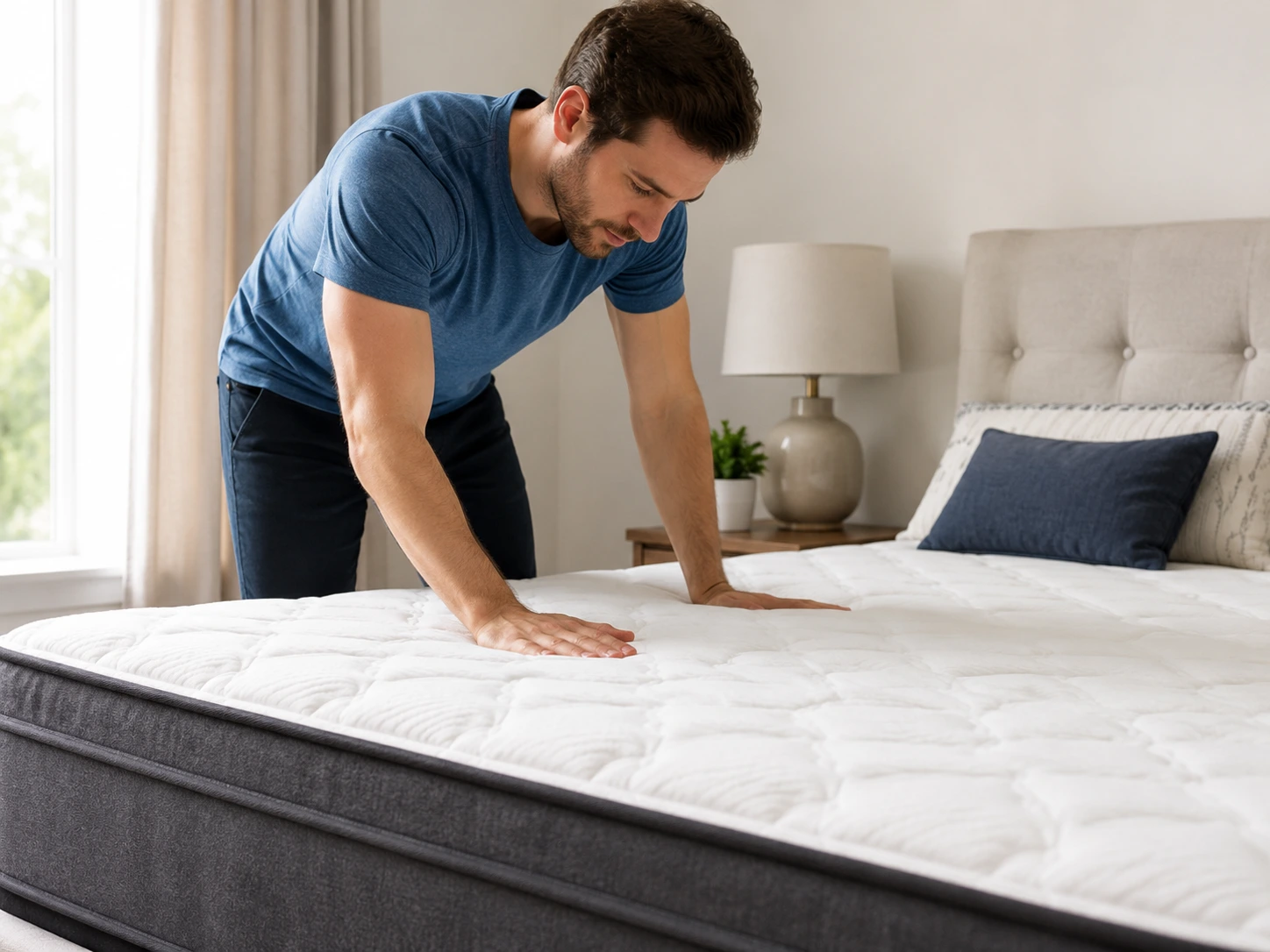
person testing mattress firmness in a bright bedroom
Choose the Right Mattress by Sleeping Position
Your sleeping position is one of the most important factors in choosing a comfortable mattress for sleep. Side sleepers, back sleepers, and stomach sleepers place pressure on different parts of the body, so they usually need different levels of cushioning and support.
Mattress for Side Sleepers
Side sleepers usually need a mattress that cushions the shoulders and hips while supporting the waist. If the mattress is too firm, pressure can build around the shoulder and hip. If it is too soft, the spine may bend out of alignment.
Example: A side sleeper with shoulder pain may prefer a medium or medium-soft comfort layer with strong support underneath.
Real-world use: Lie on your side for at least 10–15 minutes during a mattress trial. Your shoulder should not feel jammed upward, and your hips should not sink too deeply.
Mattress for Back Sleepers
Back sleepers usually need a mattress that supports the natural curve of the lower back. The goal is balanced support: enough firmness to prevent sagging, but enough contouring to avoid a gap under the lumbar area.
Example: A back sleeper may do well on a medium-firm hybrid mattress because it offers support from coils and contouring from foam layers.
Real-world use: If you wake up with lower-back tightness, your mattress may be sagging under your hips or failing to support your lumbar curve.
Mattress for Stomach Sleepers
Stomach sleepers usually need firmer support because the hips and abdomen can sink into a soft mattress. That sinking can increase strain on the lower back and neck.
Example: A stomach sleeper may prefer a firm foam or hybrid mattress that keeps the pelvis lifted.
Real-world use: If your lower back feels compressed when lying on your stomach, the mattress may be too soft for your body type.
Firm vs Soft Mattress: Which Is Better for Back Support?
The best mattress firmness for back pain is not always extra firm. Many sleepers need a balanced feel that supports the spine without creating pressure points. Very hard mattresses may feel supportive at first, but they can create discomfort if they do not contour to the body.
Harvard Health notes that older advice often recommended very firm mattresses, but people with low back pain may not sleep best on extremely hard surfaces. A medium-firm mattress is often a practical starting point for support and comfort.
Soft Mattress
A soft mattress offers more cushioning and body contouring. It may work for lightweight sleepers and some side sleepers, but it can cause poor alignment if the hips sink too deeply.
Example: A 120-pound side sleeper may find a plush mattress comfortable because it allows the shoulder to settle into the surface.
Real-world use: Choose soft only if your spine remains straight and you do not wake up with lower-back stiffness.
Medium-Firm Mattress
A medium-firm mattress is often the safest choice for many people because it balances comfort and support. It can work well for back sleepers, combination sleepers, and people who need pressure relief without deep sagging.
Example: A person who rotates between side and back sleeping may prefer medium-firm because it supports both positions.
Real-world use: If you are unsure where to start, test medium-firm before testing very soft or very firm models.
Firm Mattress
A firm mattress can be useful for stomach sleepers, heavier sleepers, and people who dislike sinking into the bed. However, it still needs enough comfort layering to avoid pressure buildup.
Example: A heavier back sleeper may prefer firm support with a cushioned top layer.
Real-world use: Do not choose firm only because you have back pain. Choose firm if it keeps your body aligned and comfortable.
How to Choose a Mattress for Back Support and Spine Alignment
The best mattress for back support keeps your spine close to neutral. That means your shoulders, hips, and lower back are supported without excessive dipping or lifting.
Back support is not only about firmness. A mattress can be firm and still unsupportive if it has poor contouring, weak edge support, or sagging materials. Support comes from the mattress core, while comfort comes from the top layers.
Check Your Spine Alignment
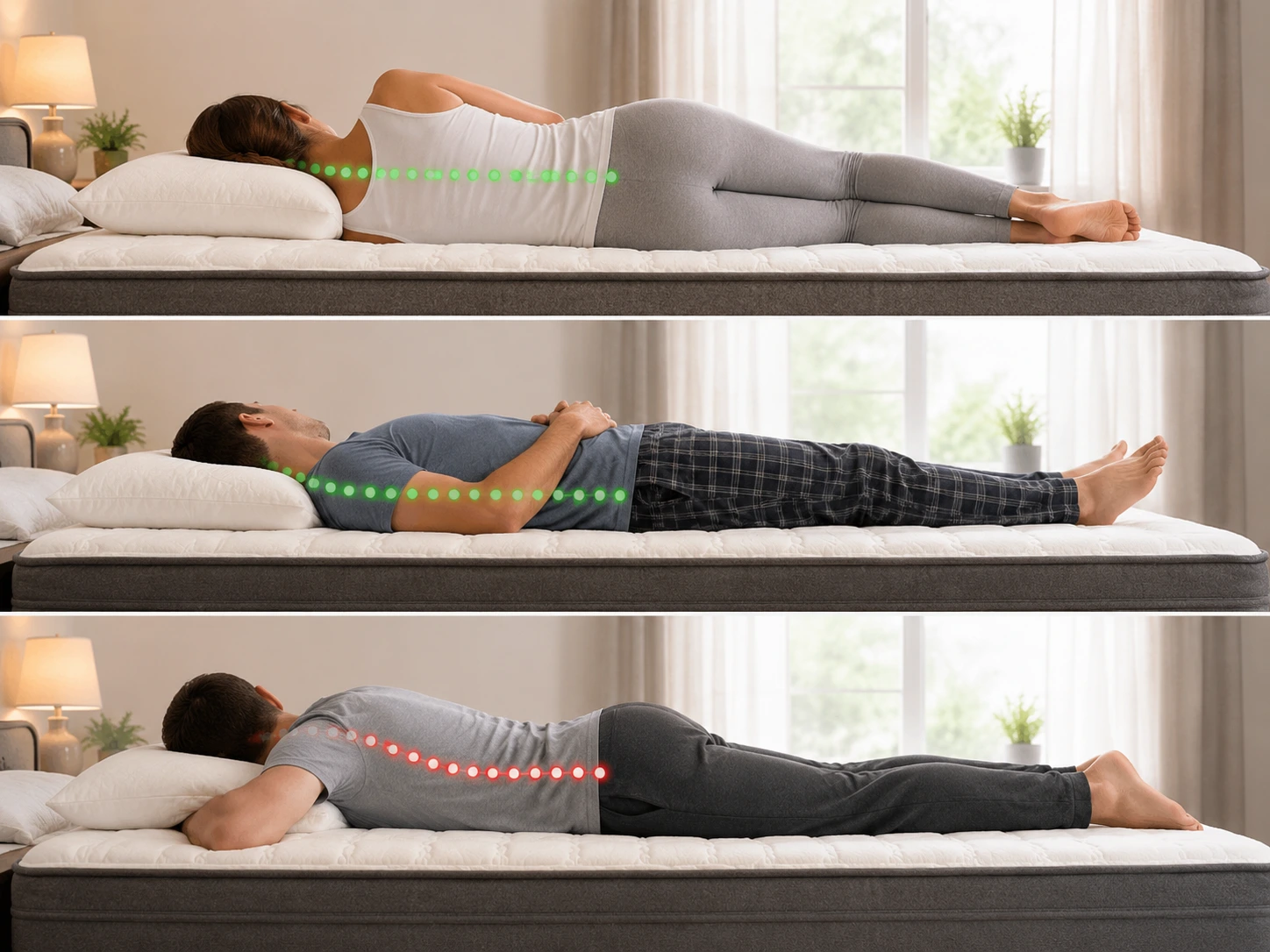
When lying on your side, your spine should look relatively straight from neck to lower back. When lying on your back, your hips should not sink lower than your shoulders.
Example: If your waist is unsupported while side sleeping, you may feel twisting through the lower back.
Real-world use: Ask someone to look at your posture while you lie on the mattress, or take a side photo during a home trial.
Support the Lumbar Area
The lumbar area is the natural inward curve of your lower back. A supportive mattress fills this space gently without forcing the spine flat or letting the hips collapse.
Example: Some mattresses use zoned support, meaning the middle section is firmer to support the hips and lower back.
Real-world use: If you mostly sleep on your back, check whether your lower back feels supported after 20 minutes of lying still.
mattress spine alignment comparison for side, back, and stomach sleepers.
Memory Foam vs Hybrid Mattress: Which Type Should You Choose?
Mattress material changes how the bed feels, how it supports the body, how much heat it traps, and how easy it is to move around. The most common choices are memory foam, hybrid, latex, and innerspring mattresses.
Memory Foam Mattress
Memory foam contours closely to the body. It is often strong for pressure relief and motion isolation, which means it can be useful for side sleepers and couples.
Example: A side sleeper with hip pressure may like memory foam because it cushions sensitive areas.
Real-world use: Choose memory foam if you want contouring, reduced motion transfer, and a hugging feel. Avoid dense foam without cooling features if you sleep hot.
Hybrid Mattress
A hybrid mattress combines foam or latex comfort layers with a coil support system. It usually feels more responsive than all-foam and often allows better airflow.
Example: A combination sleeper may prefer a hybrid because it is easier to change positions during the night.
Real-world use: Choose hybrid if you want a mix of support, bounce, edge strength, and cooling airflow.
Latex Mattress
Latex mattresses feel buoyant, responsive, and durable. They do not usually hug the body as deeply as memory foam.
Example: A sleeper who dislikes sinking into foam may prefer latex because it offers lift and pressure relief.
Real-world use: Choose latex if you want a more natural, springy, and breathable feel.
Best Mattress Features for Hot Sleepers
If you sleep hot, mattress cooling matters. Some beds trap body heat, especially dense foam models without airflow design. Cooling mattresses usually use breathable covers, gel foam, open-cell foam, coils, phase-change materials, or airflow channels.
Cooling Cover
A cooling cover can feel cooler to the touch and may help regulate surface temperature.
Example: A hot sleeper may notice a cooling cover feels more comfortable during the first part of the night.
Real-world use: Pair a cooling mattress with breathable sheets instead of heavy synthetic bedding.
Coil Support System
Hybrid mattresses often sleep cooler than dense all-foam mattresses because coils allow air to move through the support core.
Example: A hot back sleeper may prefer a hybrid mattress over thick memory foam.
Real-world use: Check whether the mattress has airflow features, not just marketing words like “cool” or “fresh.”
Comparison Table: Mattress Types and Best Uses
Buyer Decision Guide: Mattress Checklist Before You Buy
Use this checklist before choosing a mattress:
- Identify your main sleeping position: side, back, stomach, or combination.
- Choose firmness based on body support, not only personal softness preference.
- Check whether the mattress keeps your spine neutral.
- Look for pressure relief if you have shoulder, hip, or joint discomfort.
- Choose breathable materials if you sleep hot.
- Pick strong edge support if you sit on the bed edge or share the bed.
- Choose good motion isolation if your partner moves a lot.
- Read the trial period and return policy before buying online.
- Check warranty length and what counts as sagging or defects.
- Do not buy only because of a discount; match the mattress to your sleep needs.
Common Mistakes When Choosing a Mattress
1. Assuming Firm Always Means Better Support
A firm mattress can still be wrong if it creates pressure points or fails to support your lower back. Support means alignment, not just hardness.
2. Ignoring Sleeping Position
A mattress that works for a stomach sleeper may feel painful for a side sleeper. Always match firmness and cushioning to your position.
3. Forgetting About Heat
If you sleep hot, dense foam and heavy bedding can make sleep uncomfortable. Look for airflow, breathable covers, and cooling materials.
4. Buying Without a Trial Period
A showroom test is useful, but your body may need several nights to adjust. A sleep trial gives you more room to judge comfort honestly.
5. Keeping an Old Sagging Mattress Too Long
If your mattress has visible dips, weak edges, or uneven support, it may no longer be helping your sleep posture.
Expert Insight
The smartest way to choose the right mattress is to think in layers: support first, comfort second, features third. The support core should keep your body aligned. The comfort layer should reduce pressure. Cooling, motion isolation, and edge support should match your lifestyle.
For back support, avoid extremes. A mattress that is too soft can let the hips sink; a mattress that is too firm can push against the shoulders, hips, and lower back. The best mattress for sleep quality is usually the one that feels comfortable while keeping your body stable through the night.
Trusted Sources Behind This Guide
- Harvard Health Publishing — mattress firmness and low back pain guidance.
- Mayo Clinic — sleeping positions that may reduce back pain.
- Cleveland Clinic — sleep posture and spine pressure guidance.
- National Library of Medicine — review discussing mattress firmness and low back pain.
FAQs About How to Choose the Right Mattress
How do I choose the right mattress?
Choose the right mattress by matching it to your sleeping position, body weight, firmness preference, back support needs, and temperature comfort. The mattress should keep your spine neutral and reduce pressure on your shoulders, hips, and lower back.
What mattress is best for back support?
The best mattress for back support is usually one that offers balanced firmness, lumbar support, and pressure relief. Medium-firm mattresses are often a good starting point, but the right choice depends on your sleeping position and body type.
Is a firm or soft mattress better for back pain?
Neither is automatically better. A mattress that is too soft may cause sagging, while one that is too firm may create pressure points. Many sleepers with back discomfort prefer a medium-firm feel because it balances support and comfort.
What mattress should side sleepers choose?
Side sleepers usually need a mattress with enough cushioning for the shoulders and hips. A medium-soft to medium-firm mattress often works well, depending on body weight and pressure sensitivity.
What mattress should back sleepers choose?
Back sleepers usually need a mattress that supports the lower back and prevents the hips from sinking too deeply. Medium to medium-firm mattresses are often a strong choice for back sleepers.
What mattress should stomach sleepers choose?
Stomach sleepers usually need a firmer mattress because soft mattresses can let the hips sink, which may strain the lower back. A firm or medium-firm mattress is often more supportive for stomach sleeping.
Is memory foam or hybrid better?
Memory foam is better for close contouring and motion isolation. Hybrid mattresses are better for bounce, airflow, edge support, and easier movement. The better option depends on how you sleep and whether you run hot at night.
How do I know if my mattress is wrong?
Your mattress may be wrong if you wake up with back pain, feel pressure in your shoulders or hips, roll toward the middle, overheat often, or notice visible sagging. Poor sleep quality can also be a sign that the mattress does not fit your needs.
Conclusion
Choosing the right mattress starts with your body, not the brand name. Focus on your sleeping position, firmness needs, pressure points, back support, heat level, and preferred mattress material.
For better sleep and back support, look for a mattress that keeps your spine neutral, supports your lower back, and feels comfortable for your most common sleep position. Side sleepers usually need more pressure relief, back sleepers need balanced lumbar support, and stomach sleepers usually need firmer lift through the hips.
The best practical advice is simple: choose support first, comfort second, and features third. Then confirm the mattress with a real trial period before fully committing.
 ✓
✓